

Introduction
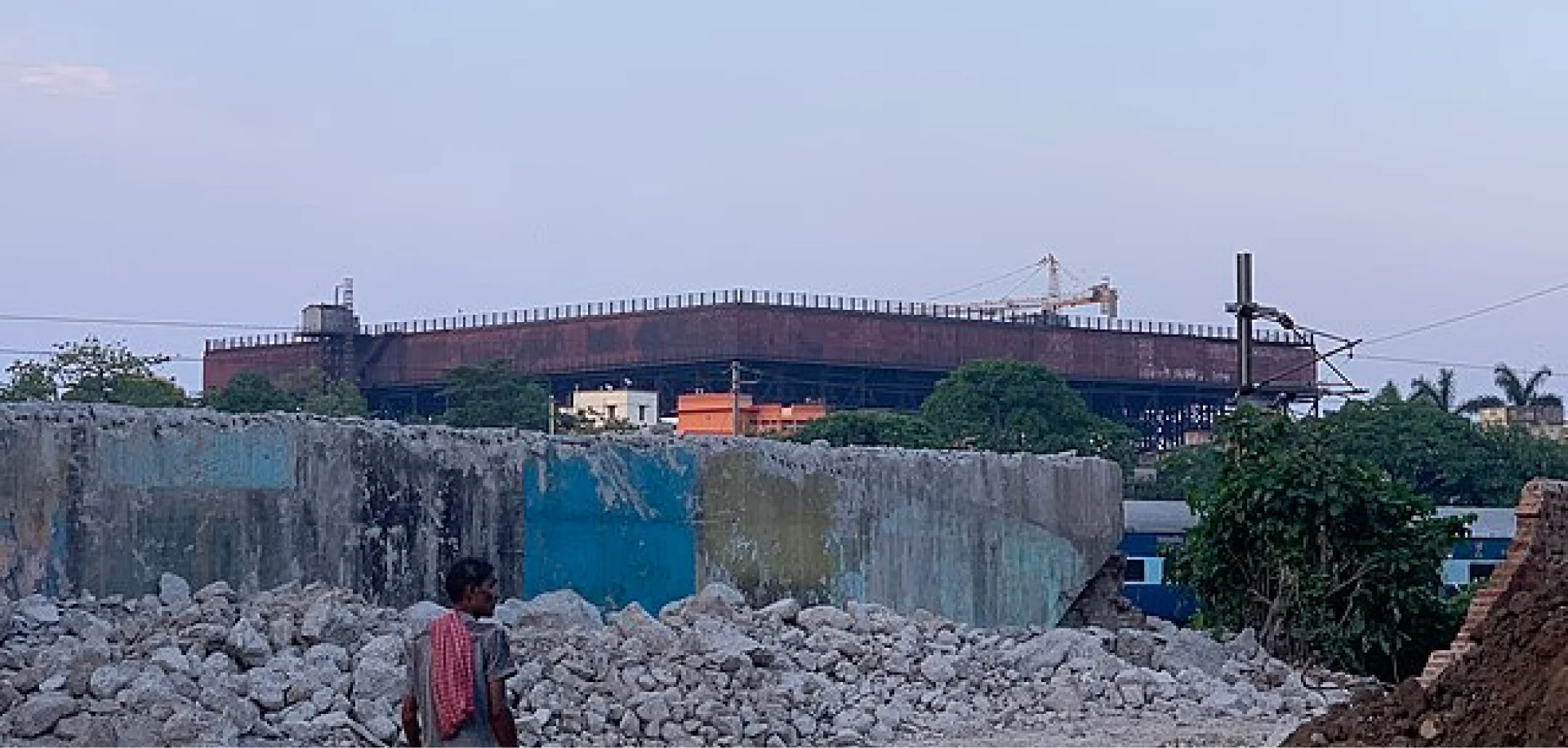
In the heart of Kolkata, India, lies a hidden marvel – the Tala Tank, a majestic water tower
that has stood tall for over a century. This architectural masterpiece was constructed in 1911
and continues to serve as the lifeline of the city, supplying water to its residents. Made of
Burmese teak wood and steel akin to that of the RMS Titanic, the tank’s distinct aroma of
history and resilience captivates all who encounter it.
The Tala Tank is a historic water body located in the heart of Kolkata, India. The tank was
built during the British colonial period, and has been a vital source of water for the city’s
residents for centuries. The Tala Tank is now considered a landmark of the city, and has been
listed as a heritage site by the Kolkata Municipal Corporation. Despite its importance, the
Tala Tank remains largely unknown to the general public, and there has been limited research
conducted on its history, significance, and impact on the city of Kolkata.
History
Before the advent of pumped water supply in Kolkata in 1820, the city relied on the Lal Dighi
for its water needs. However, with the growing population, a more substantial solution was
needed. Thus, the Assistant Engineer of Calcutta Corporation (now known as KMC), Arthur
Peirce conceived the idea of the Tala Tank – a daring proposition of a nine-million-gallon
water reservoir overhead. Commissioned by Lieutenant Governor Edward Norman Baker, the
tank was inaugurated in 1911, made possible through generous donations and meticulous
construction using top-notch materials imported from England and Burma.

Structure
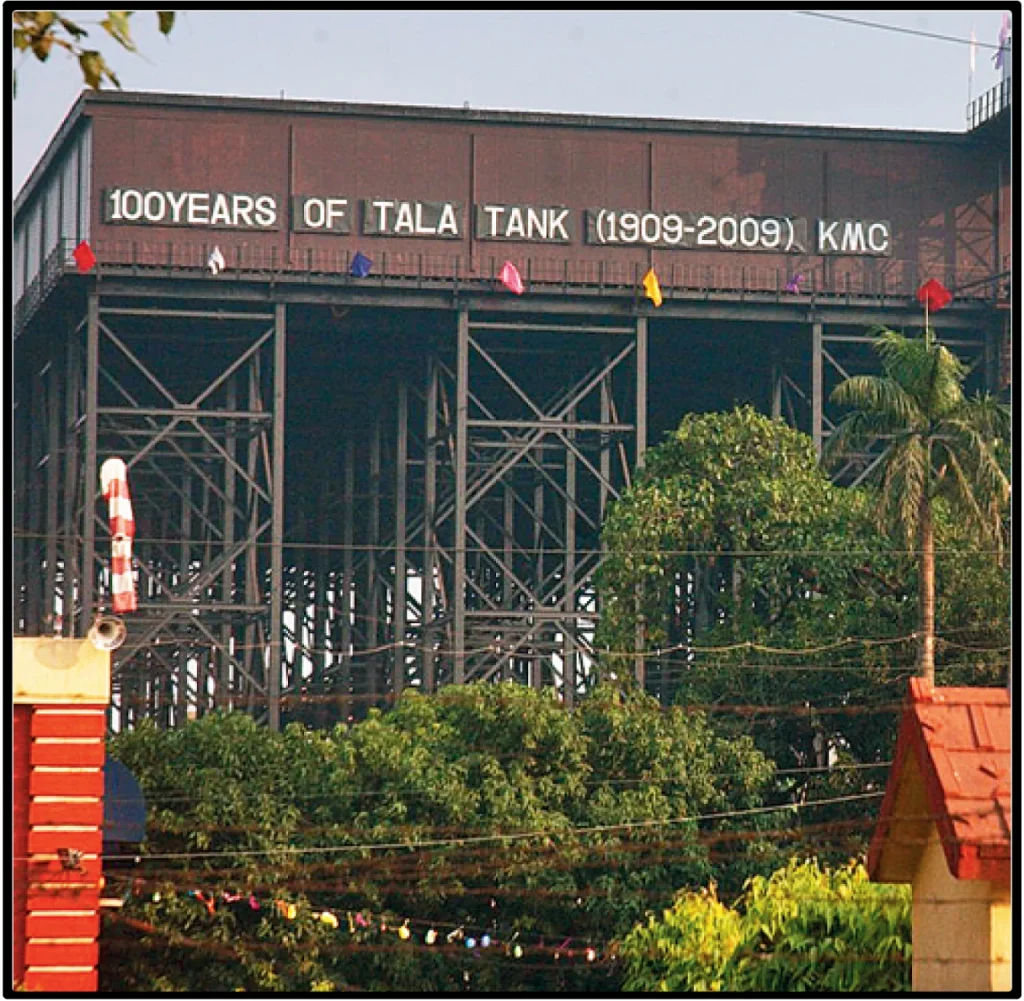
The Tala Tank, claimed to be the world’s largest overhead water reservoir, towers 110 feet
above the ground, covering a vast area of 3-4 acres. Its distinctive architecture and
engineering draws visitors from far and wide, as they marvel at its engineering brilliance and
historic significance. Four individually isolated chambers and a single pipeline from Palta
Water Works ensure a constant supply of water to the city, functioning as a crucial water
reserve. Throughout its existence, the Tala Tank has faced numerous challenges and calamities, yet it has stood resilient. It survived the Nepal-India earthquake in 1934, the Imperial Japanese aerial bombings during World War II, and the wrath of Cyclone Amphan in 2020. The Tala Tank has also played a crucial role in the city’s water management system, providing water for irrigation, sanitation, and other uses. Additionally, the Tala Tank is an important source of income for many of the city’s residents, as it provides fishing opportunities and other livelihoods. The tank’s unyielding structure and strategic renovations have safeguarded Kolkata’s water security, making it an indispensable part of the city’s infrastructure.
Significance and Impact
During my exploration of the significance of the Tala Tank in Kolkata, I came across an
intriguing revelation about its impact on the lives of the dhobis in the nearby Dhobi Ghat.
Eager to understand the water source for their laundry work, I visited the area and
interviewed a dhobi and one of his helpers. The dhobi informed me that the Tala Tank plays a
crucial role in their daily operations. The water from the tank is essential for washing, rinsing,
and soaking clothes, making their laundry work more efficient and sustainable. This reliance
on the tank’s water has been a tradition passed down through generations, highlighting its
continued importance in preserving their age-old profession. My visit to the Dhobi Ghat shed
light on the symbiotic relationship between the Tala Tank and the dhobis, where the tank’s
water supply plays a significant role in preserving their traditional laundry work. It
exemplified how urban infrastructure can have a multifaceted impact, not only in providing
essential services to residents but also in supporting and sustaining the livelihoods of local
communities.
Dhobi Ghat, Kolkata


Source : Photographs taken by writer
Conclusion
In conclusion, the Tala Tank is a significant and important part of the city of Kolkata and its
residents. The tank has a rich history and continues to play a vital role in the city’s water
management system. The Tala Tank is a symbol of the city’s heritage, and an important part
of its cultural and economic landscape. The Tala Tank is a reminder of the city’s history, and a
testament to the resilience and ingenuity of its residents. Further research on the Tala Tank is
needed to better understand its history, significance, and impact on the city of Kolkata and its
residents.