

Introduction
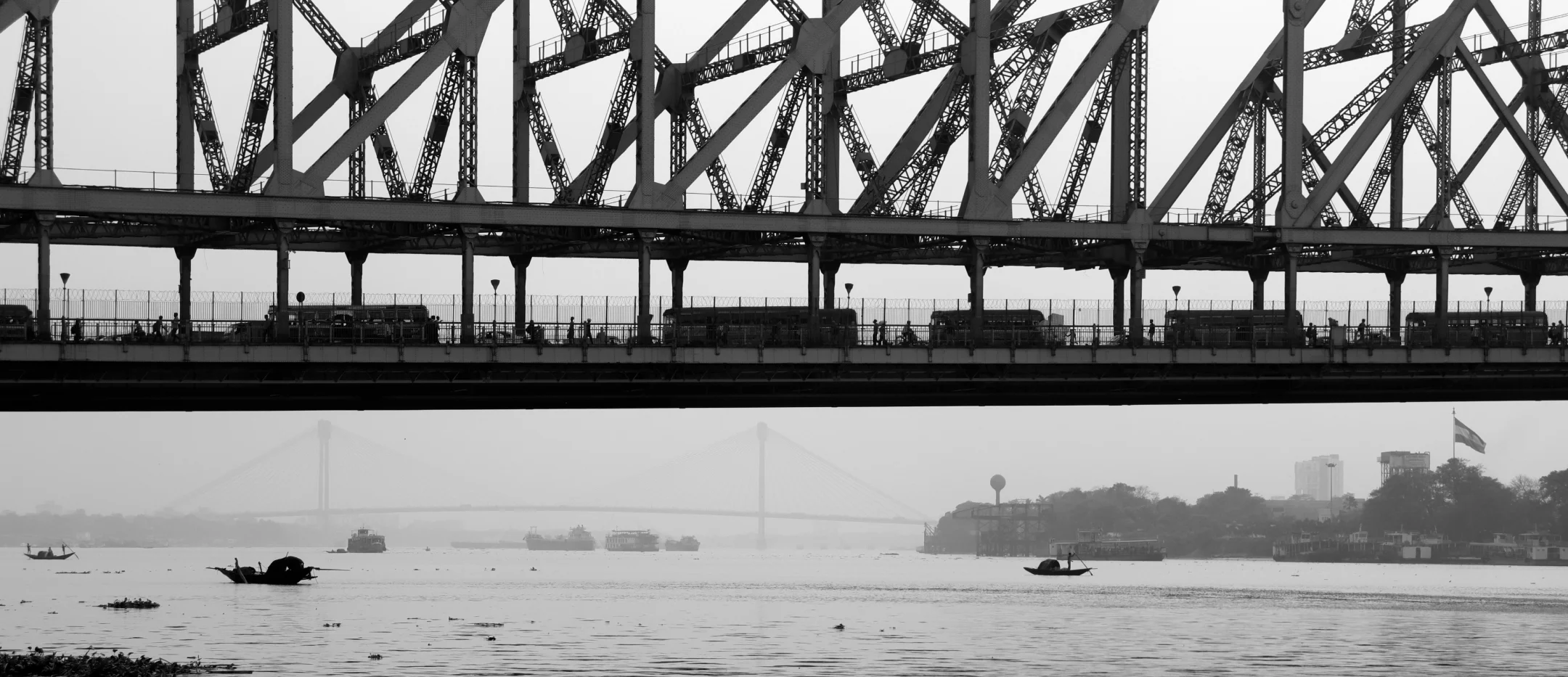
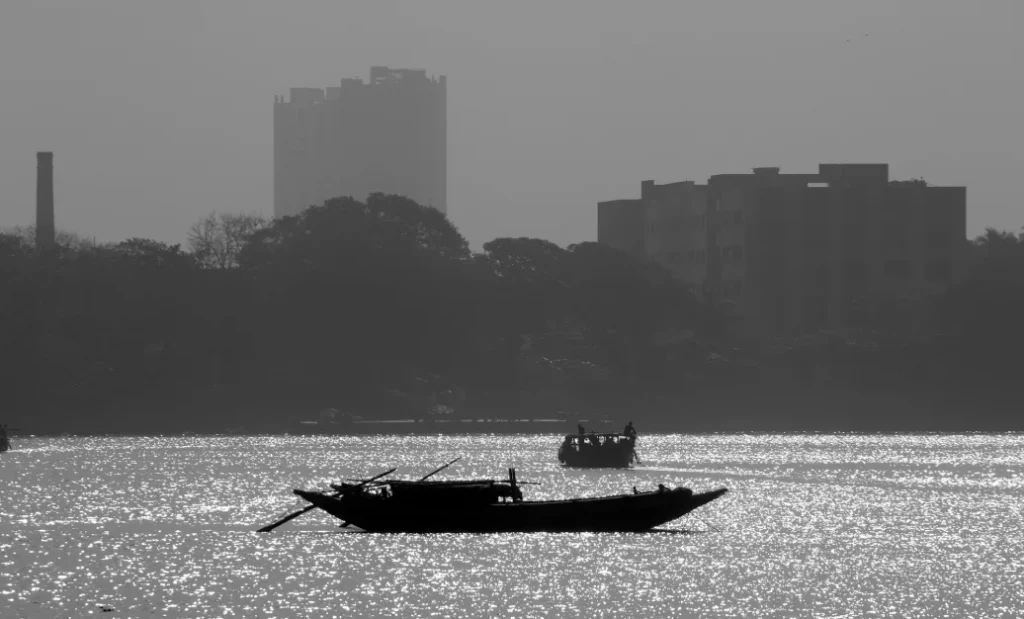
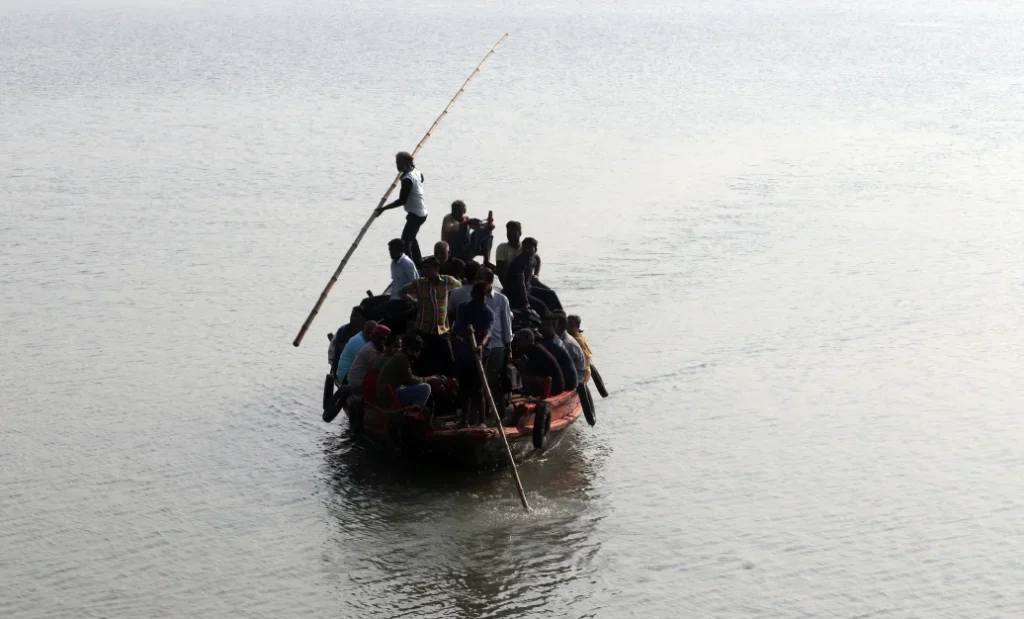
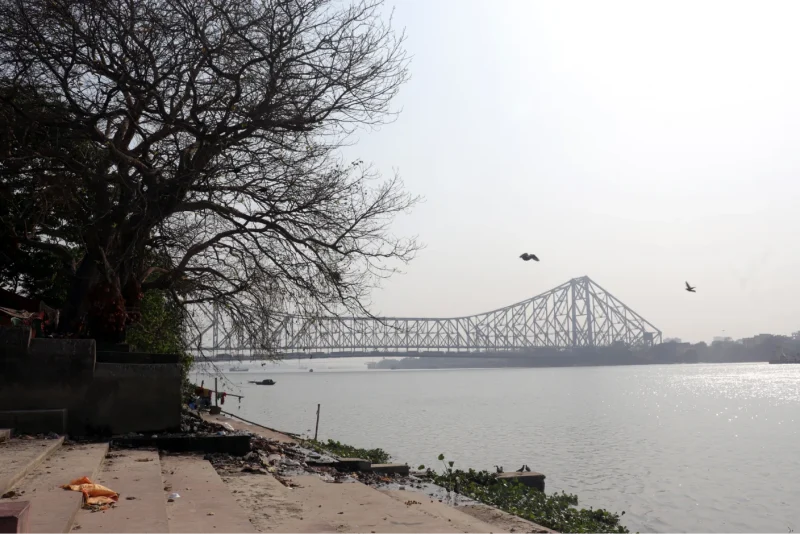
The river Hugli, acted as ‘aorta’ in flourishing the city of Kolkata. The stretch of river flowing along Kolkata is considered as sacred and is also termed as Ganga where the holy deep is a customary ritual for people. This small span of river played an important role as source of communication and boats plying on her, played the pivotal role in transporting goods and people along and across the river.
Kolkata was the vital hub of riverine trade and transport and therefore various types of watercraft visited and served the place from distant lands. With the passage of time the halo of glory though has faded yet the rudimentary glow is still there and even today we find varieties of boats to ply on this river. In old photographs of Kolkata various varieties of boats were seen and astonishingly the boats that we see at present have the same typological similarities proving that old Kolkata is still thriving silently.
Kolkata – The Vibrant City
Deep-rooted influence of boat in Kolkata
“The old Kolkata has a cultural background since three hundred years as it sprouted on the bank of Hugli river and so here we find the traditional culture even today in an urbanized form. This part of Kolkata has Kumortuli (hamlet of potters), Jele Para (hamlet of fisherfolk), Ahiritola (hamlet of milkmen), and they had a deep connection with water as well as boats. ”
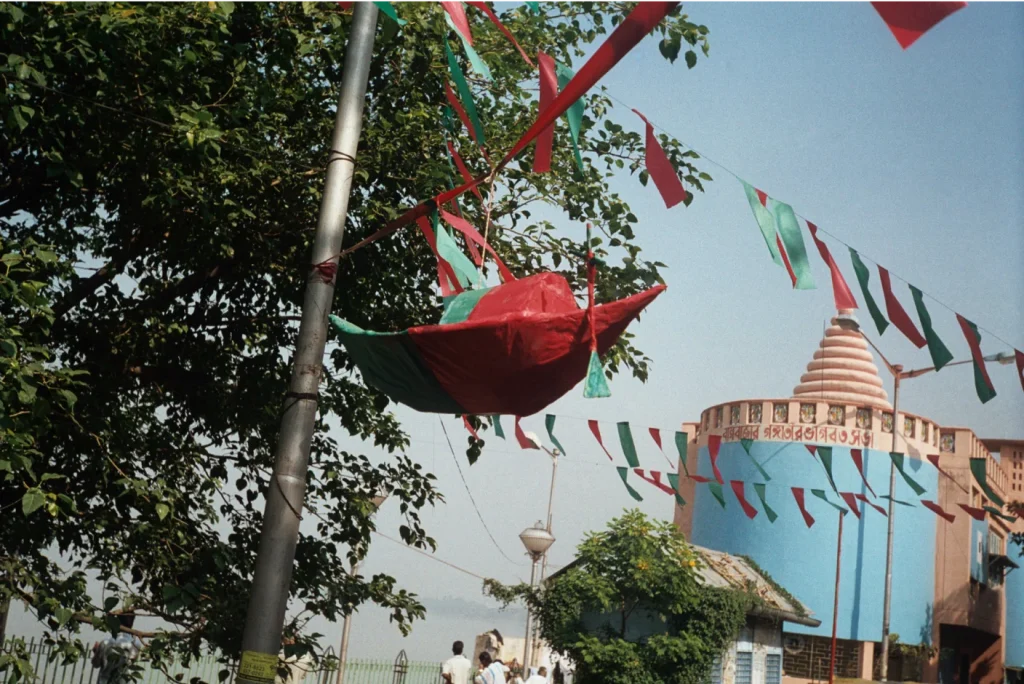
The boat has a deep impact on the sentiment and tradition of Bengali culture and so the symbolical presence of it can be found in various layers of the socio-cultural segment of Bengal. The old Kolkata has a cultural background since 300 years as it flourished on the banks of the Hugli river and so here we find the traditional culture even today in an urbanized form. This part of Kolkata has Kumortuli (hamlet of potters), Jele Para (hamlet of fisherfolk), Ahiritola (hamlet of milkmen), and they all had a deep connection with water as well as boats. When the boat penetrated the cultural life of Kolkata’s people is not exactly known, but that it has penetrated is for sure as we even today can see the use of boats and replicas in various forms representing some major social happenings like Mohunbagan, the renowned football club of Kolkata, has chosen the boat as their club symbol. The overhead reservoir can even take the shape of a peacock headed pleasure boat named Mayurpankhee which gives us the impression that somewhere the boat is embedded deep into their culture. Durgapuja has got a connection with boats as Maa Durga uses it as one of her vehicles to visit our land. Keeping this in mind, the boat is even used as a catchy advertisement by a renowned shoe company to attract common people.
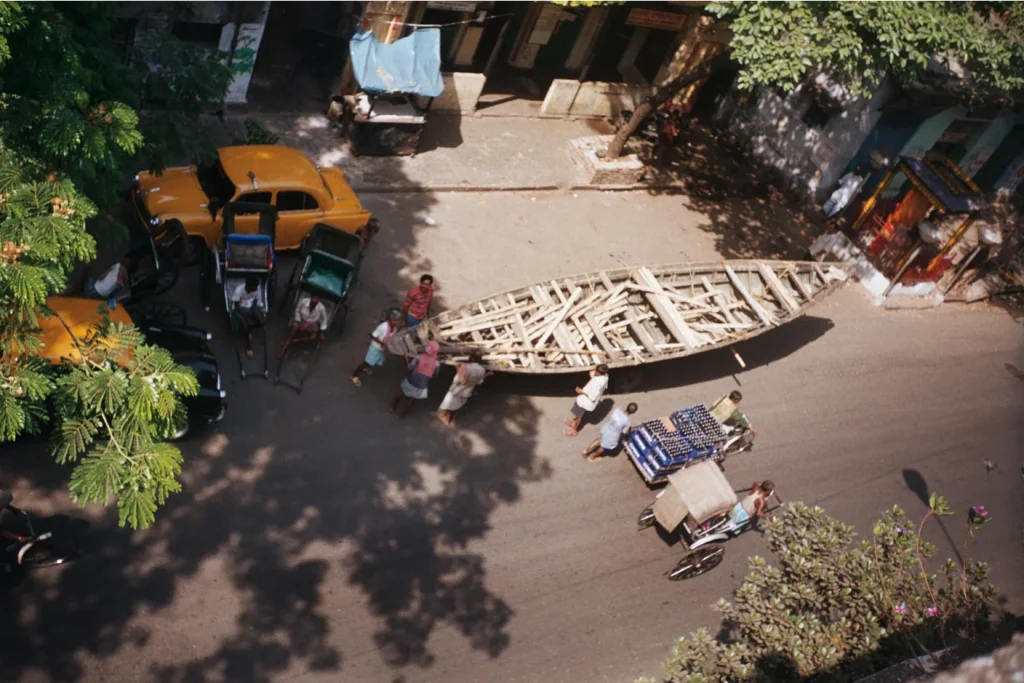
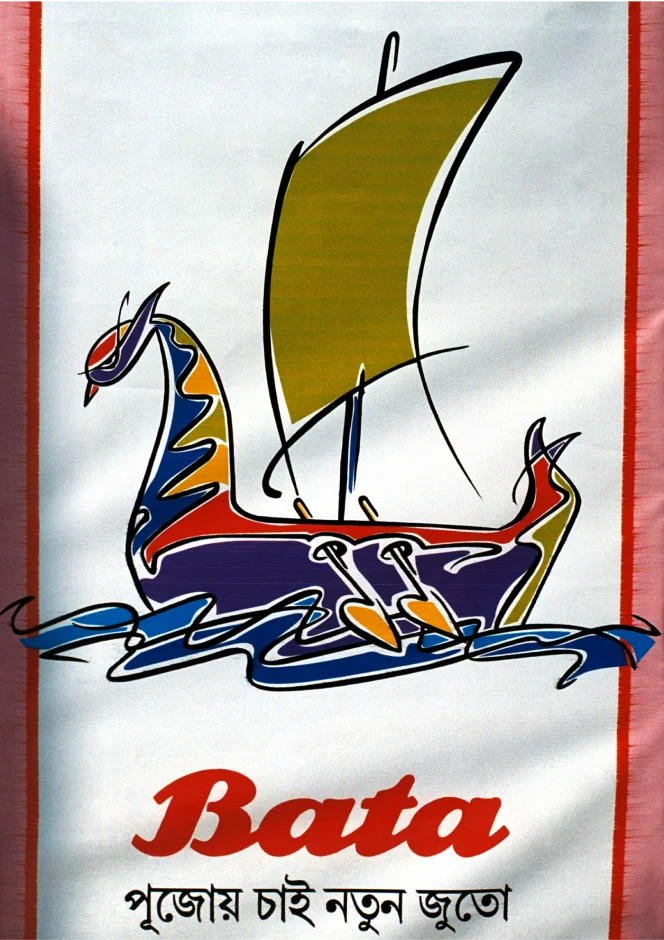
“When boat has penetrated the cultural life of Kolkata’s people is not known exactly but that it has penetrated is for sure as we even today can see use of boats and replicas in various forms representing some major social happenings”
“Mohunbagan, the renowned football club of Kolkata, has chosen boat as their club symbol.”
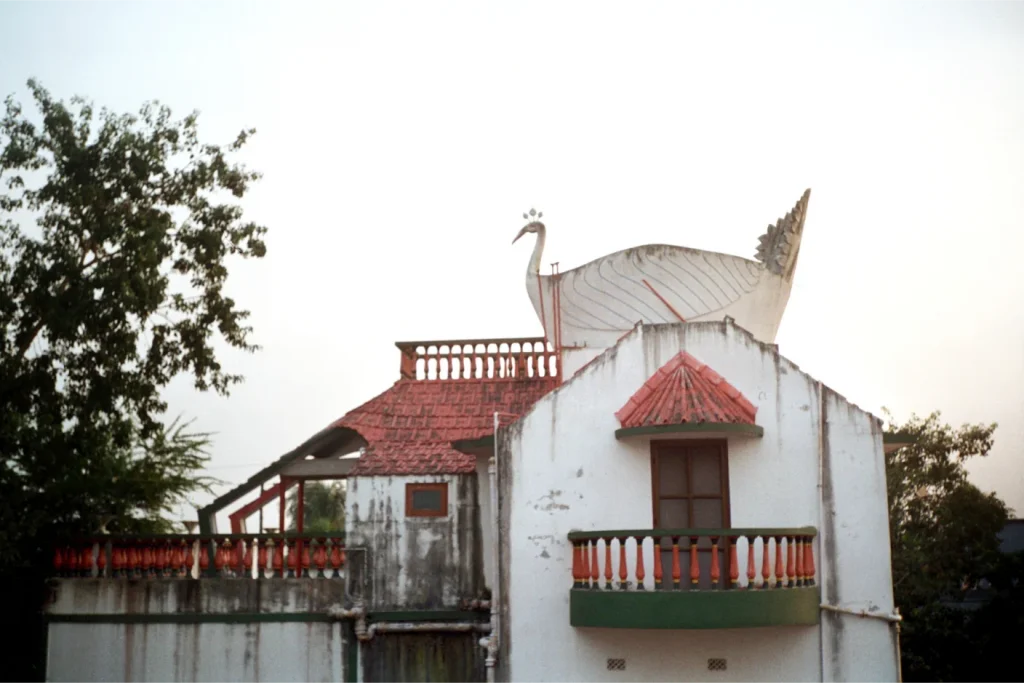
“The overhead reservoir can even take the shape of a peacock headed pleasure boat named Mayurpankhee at Kolkata which gives us an impression that some where boat is embedded deep in their culture.”
Symbolic boat in rituals
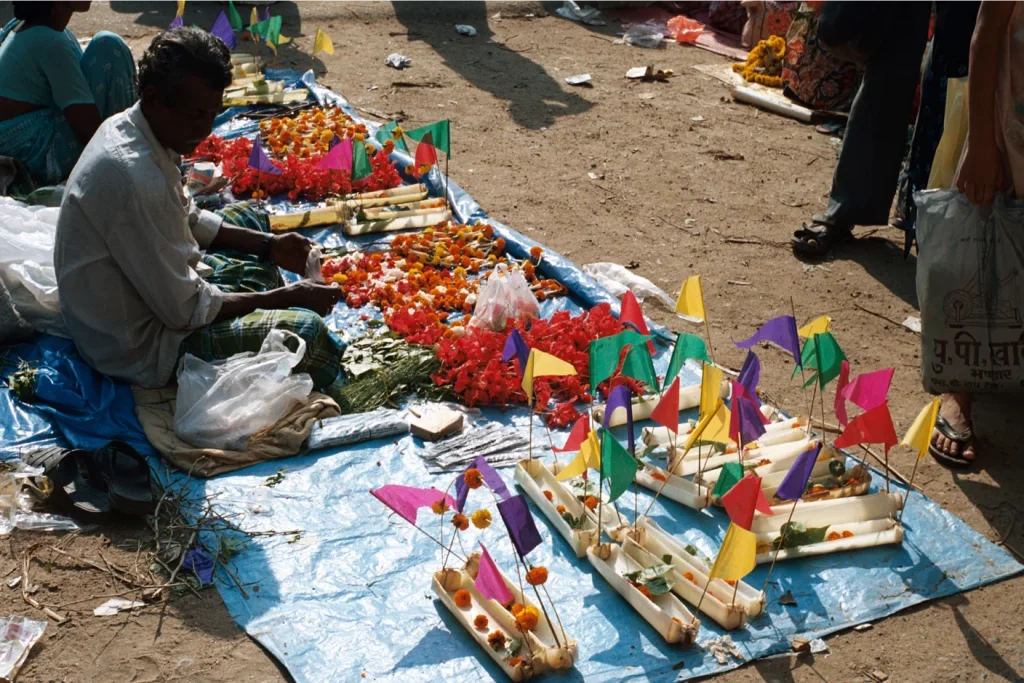
Boat is very much present in various rituals and customs of the people of Kolkata, like during makar sankranti (mid of January) boats are made with flaps of banana trunks and put on the river Ganga to float which symbolically represents the riverine/maritime trade.
Kolkata, the labyrinth
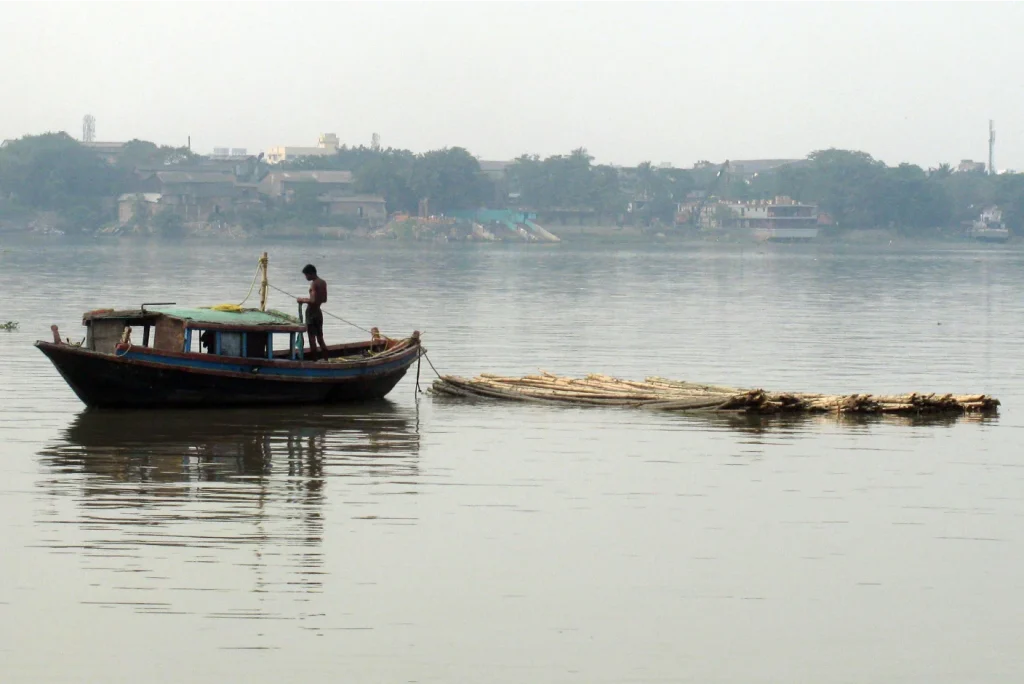
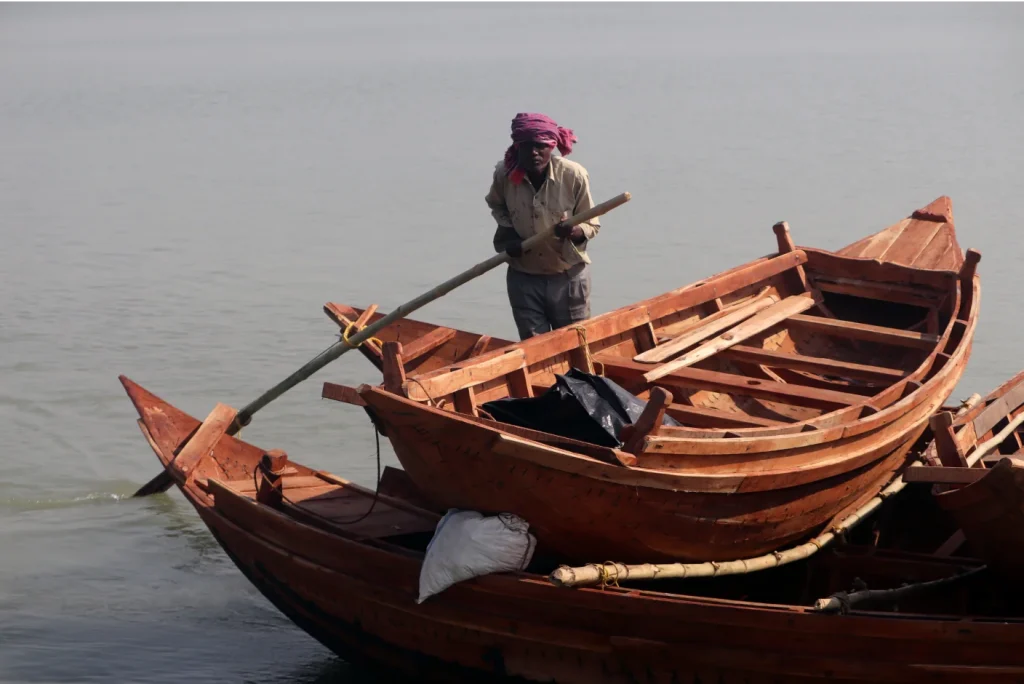
Different types of boats represent diverse typologies which are related to their function (use), and the different stretches of water on which they ply, considering its depth, currents, waves etc., and above all local traditions. These typological varieties are like jele dingi, jele bachhari, pansi, bhanr, khorokisti, sultani, talai, mahajoni, etc. These boats found in the vicinity of Kolkata have a connection with Kolkata but are not originally from the city. Say, for example, fishermen using the jele dingi which is found in Bagbazar, Ahiritola, Sovabazar and Posta region, actually is hailed from Baduria of North Twenty-Four Parganas which carries the original tradition of that place. Again all the boats used to carry straw from Sundarbans to Kolkata were crafted in Geonkhali of Medinipur. Similarly, pansi, a boat used to carry silt, though built in Ghusuri, Howrah district is originally from Rajmahal of Bihar.
CONNOTATION OF THE TERM NOUKA
When the Bengali word, nouka, is used it covers both the categories of big and small watercraft. The designations, which are more specific, are nouka, for a large craft which tends to be rowed and dingi, for a small one in which paddling is the more common mode of propulsion. The origin of the West Bengal dingi can be linked with the Austric term dingy. In Medinipur some vessels such as the sultani and khorokisti are called BOT (boat). It appears that the term bot, is used to designate big crafts with sails. In Kakdwip, the kakdwip trawler, is always referred to as a trawler, not as a boat.
SPECIALITY OF BENGAL BOATS
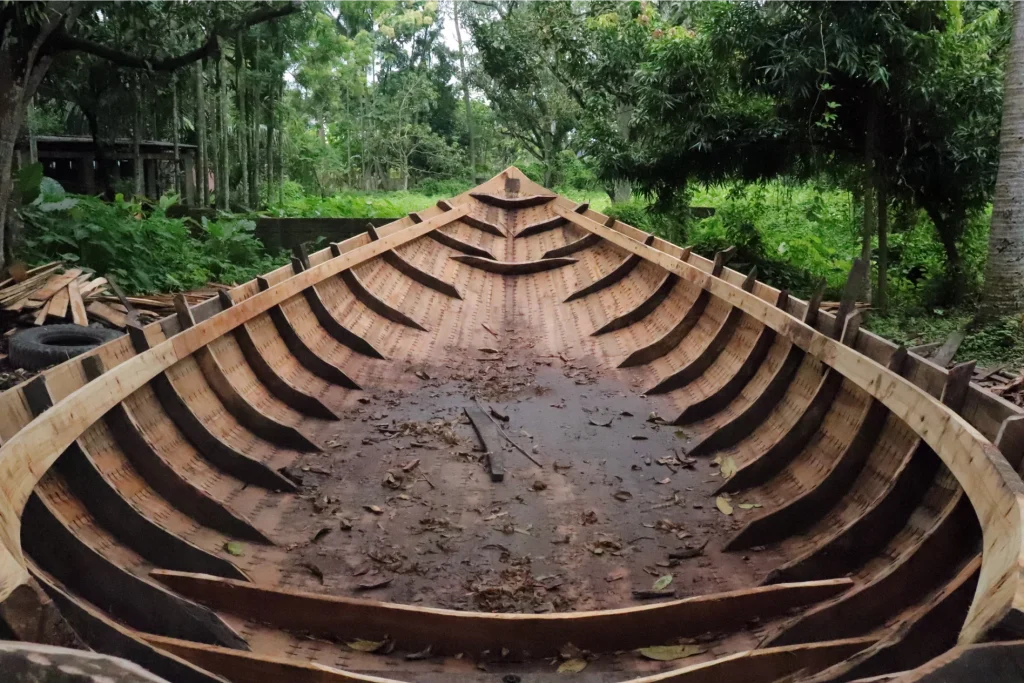
In Bengal the boat-building starts by building the shell first, planking takes place from the centre board, and then fitting plank by plank from the garboards (the planks next to the keel) to the sheer strake (the upper edge of the boat’s side). The planks are laid one by one on each side, and joined and fastened with metal staples, called patam or jolui.
The hull thus has a smooth surface, as opposed to the European clinker built boats in which the planks are laid successively, overlapping each other. After finishing the empty shell of the hull, the shipwrights usually add a set of inner frames.
Basil Greenhill, a renowned boat researcher, inferred that the boats in Bengal “not as a strong framework with a water-proof skin of planks stretched across it but as a hollow vessel, a spoon shape of thin timber, reinforced, if need be, with cross pieces and ribs. But to them these (are) incidental accessories.” (Greenhill, Basil. Boats and Boatmen of Pakistan. David & Charles, Newton Abbot, 1971, p.78)
PANSI
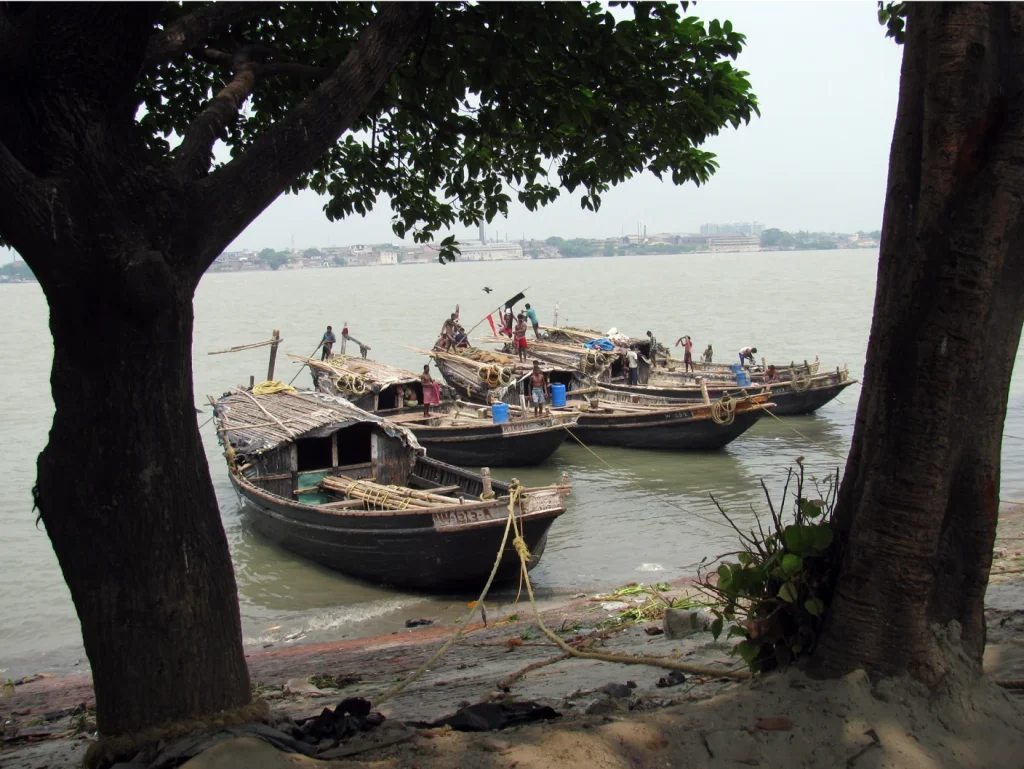
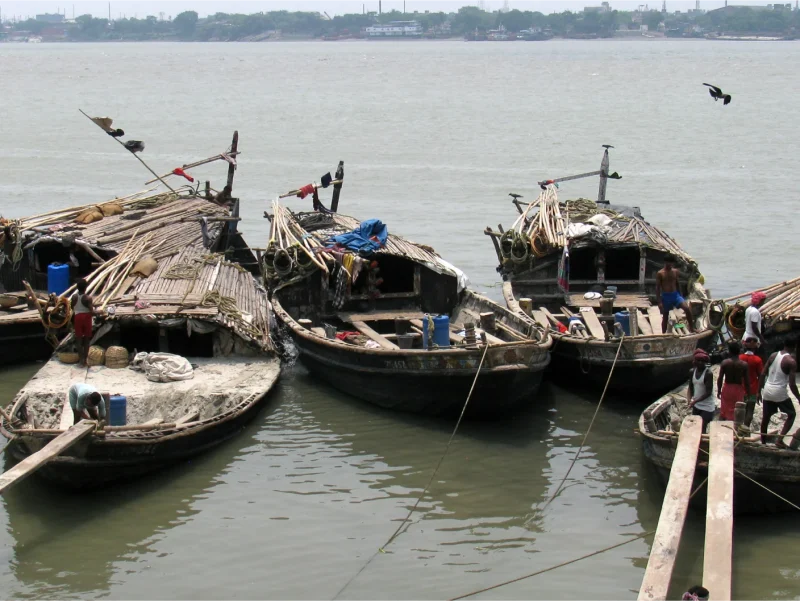
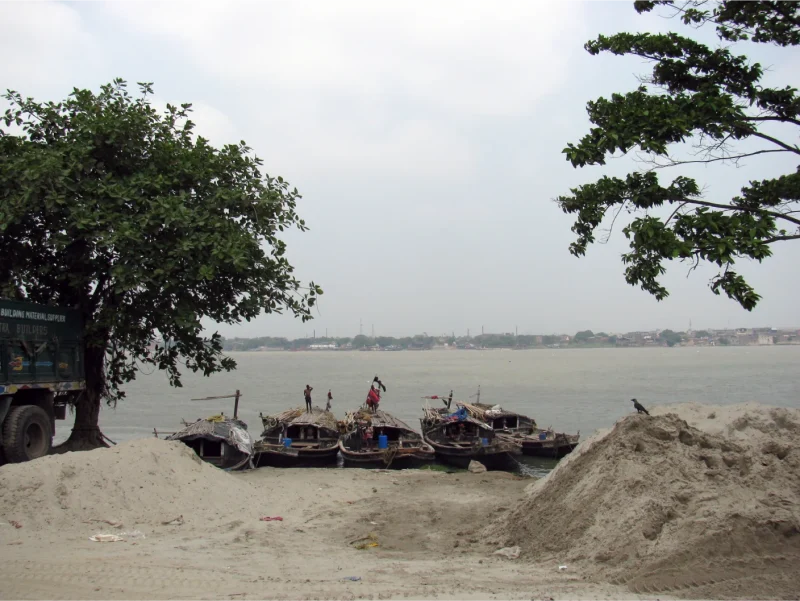
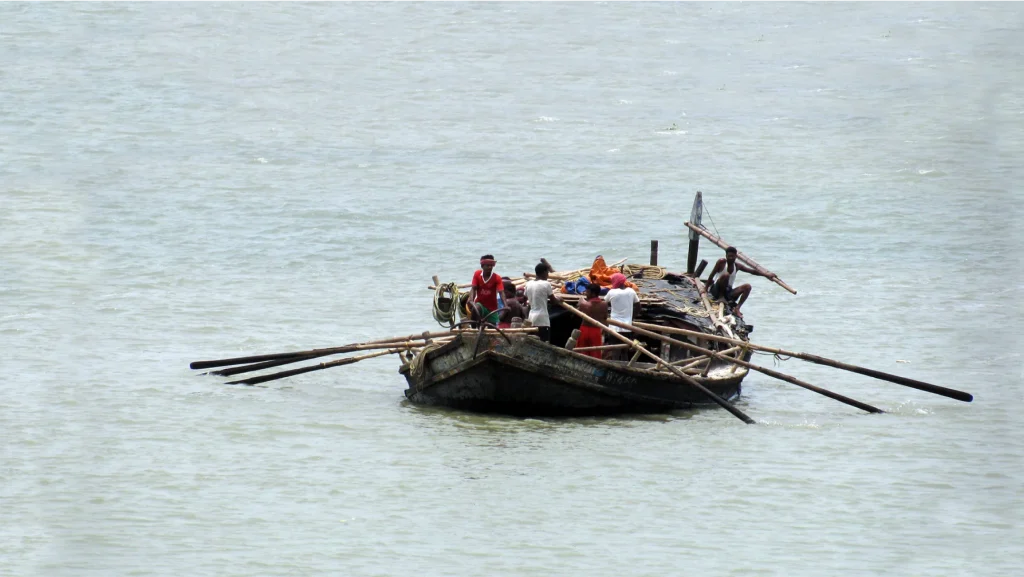
Pansi, a cargo boat, was used in carrying salt from the cargo ships moored at Calcutta Port to the various warehouses located on the upstream of Calcutta Port.
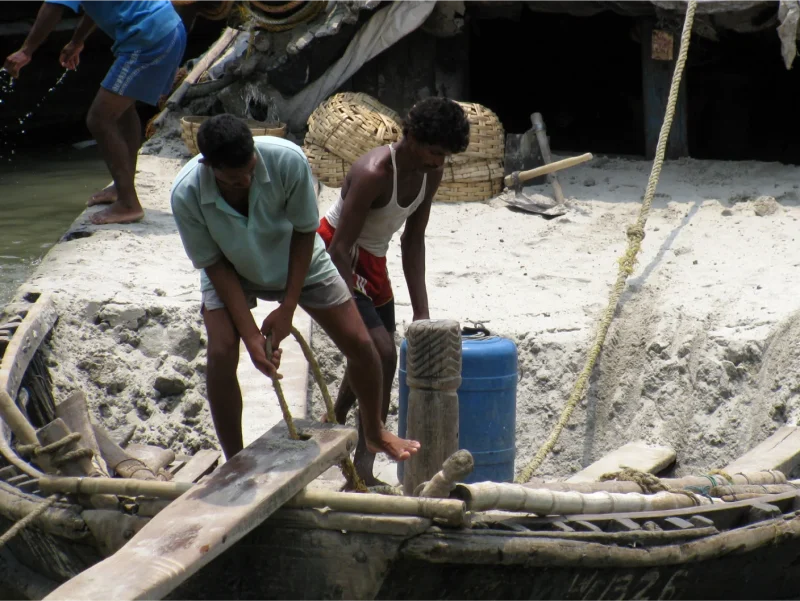
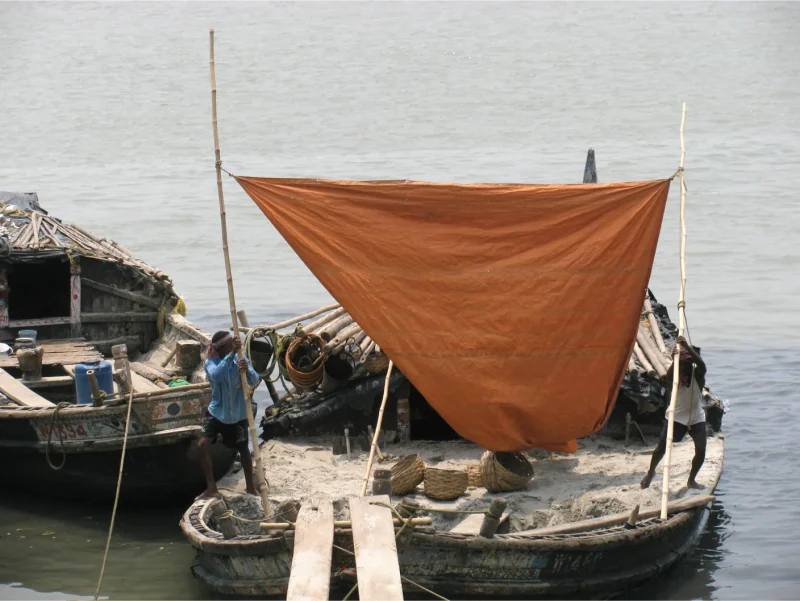
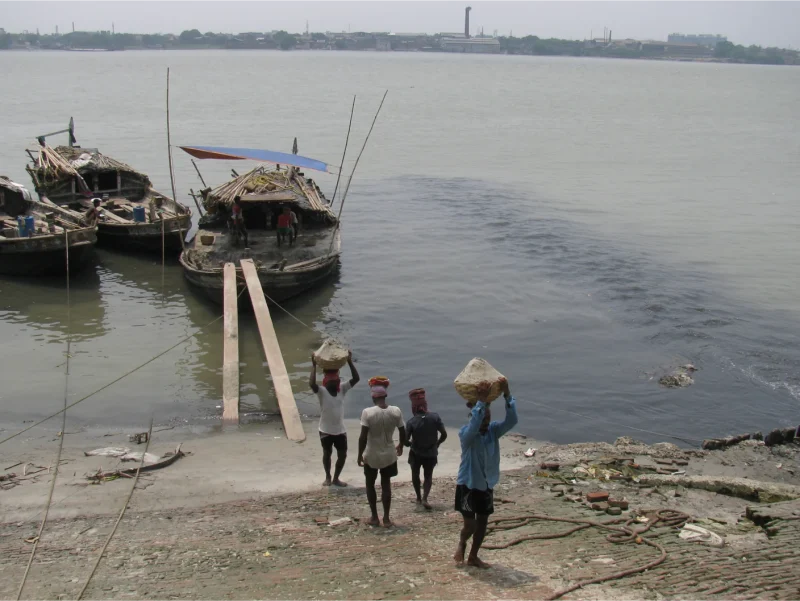
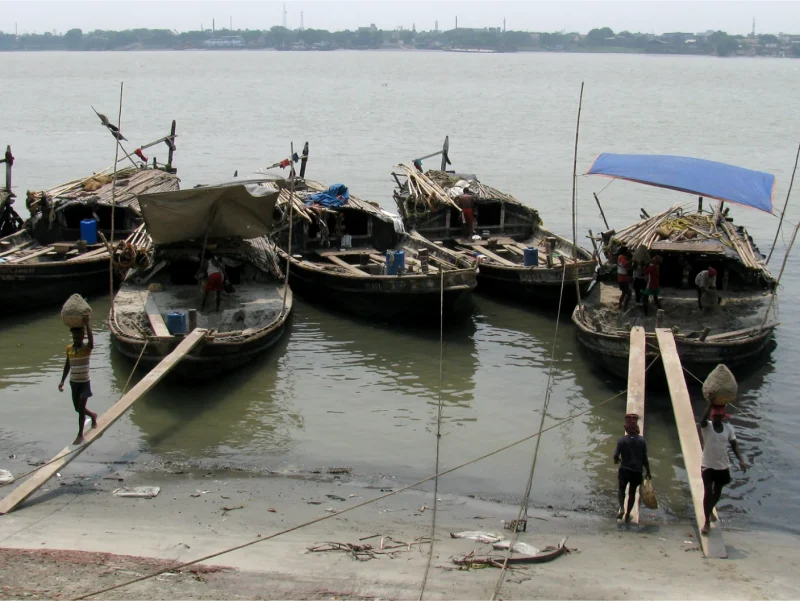
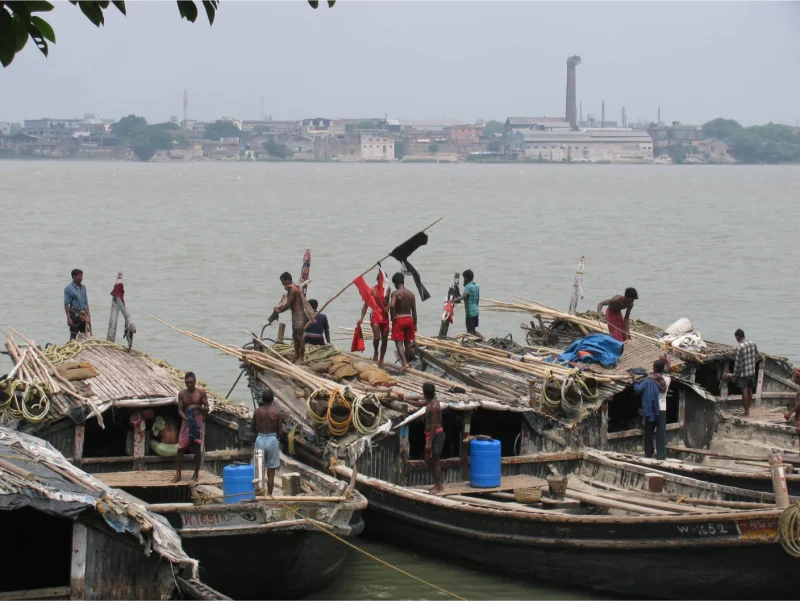
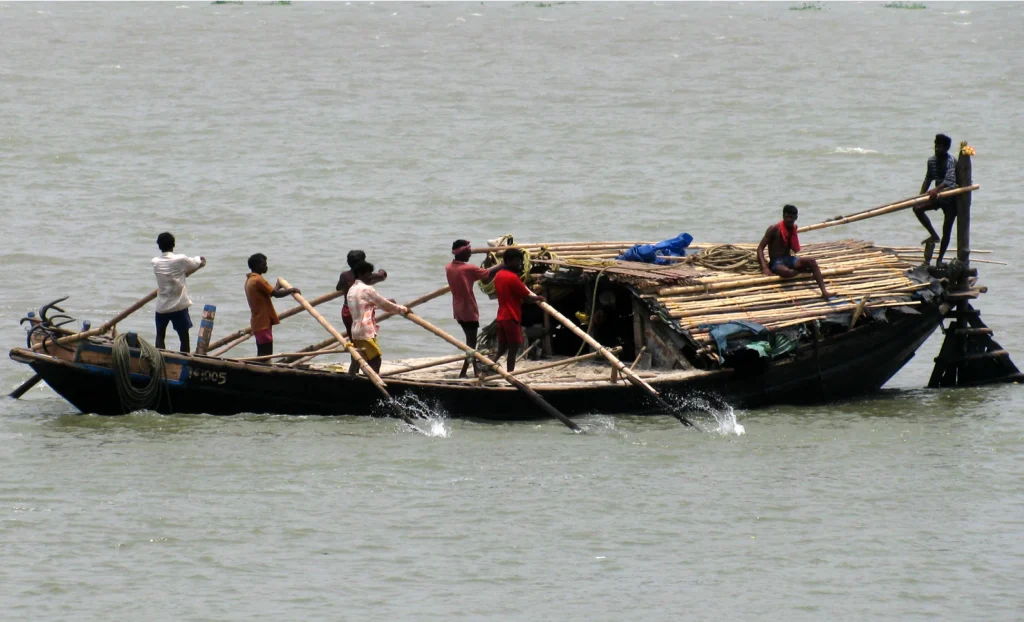
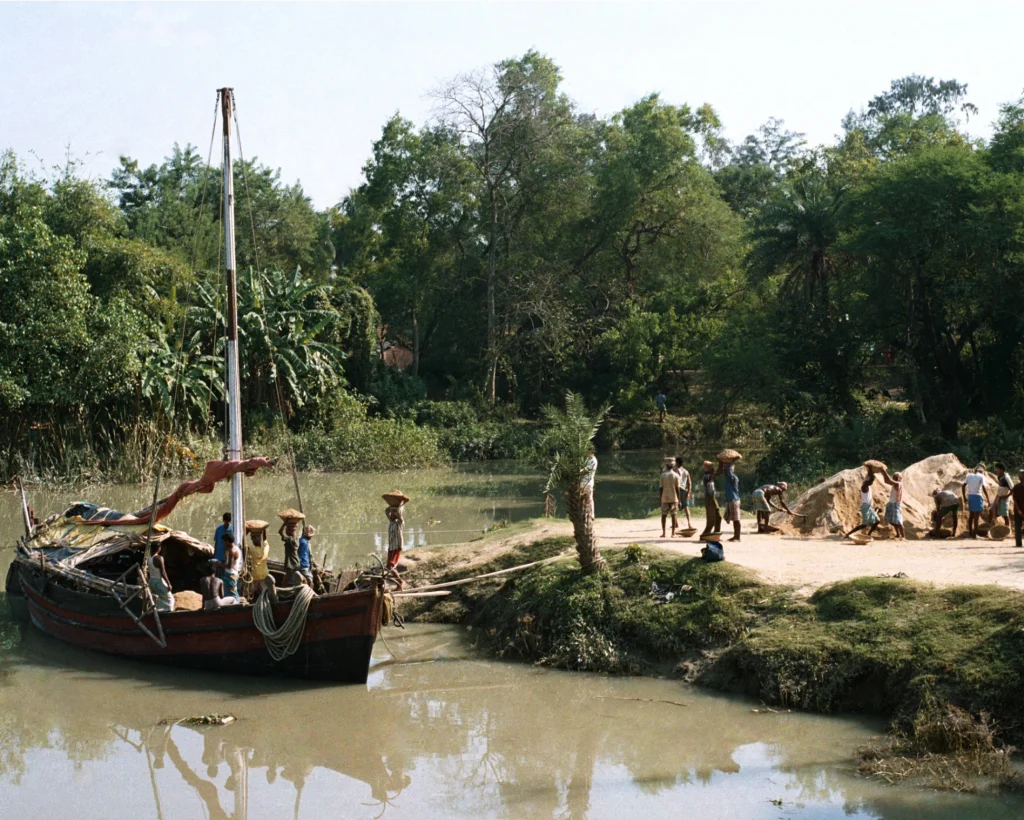
The worker folks and boats were compelled to change their work pattern and instead of salt they are lifting and carrying white sand (deposited silt) from the char which is used in road construction and land filling, a more lucrative job to them at present. Still these boats are driven manually using long oars and occasionally by a square sails.
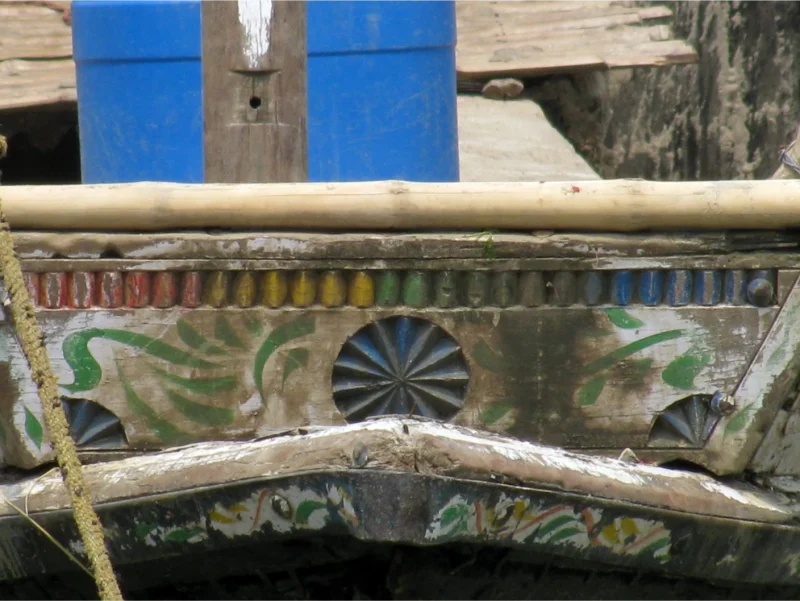
The pansi is smooth skinned, shell built round hulled boat with long beam and shallow depth. Bottom of the boat is spoon shaped and the craftsmanship is a bit blunt compare to other boat types.
“The pansi : ‘pan jaisi’ (beetle leaf shaped) – Near Kashipur, North Kolkata. Round hulled smooth skinned boat with wide beam.”
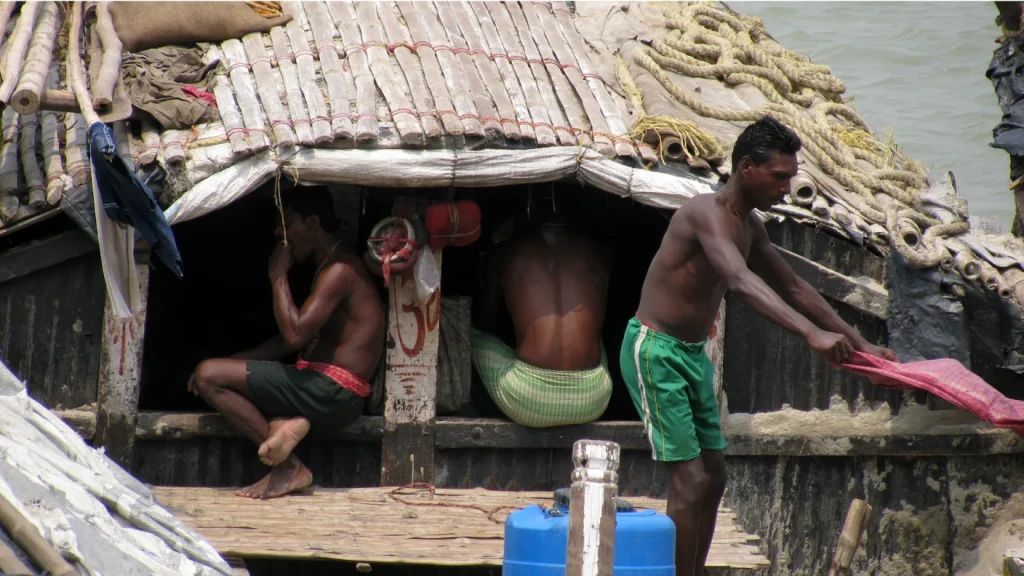
“Release of exertion – Curved permanent shed giving shelter to the boatmen for cooking, eating and resting.”
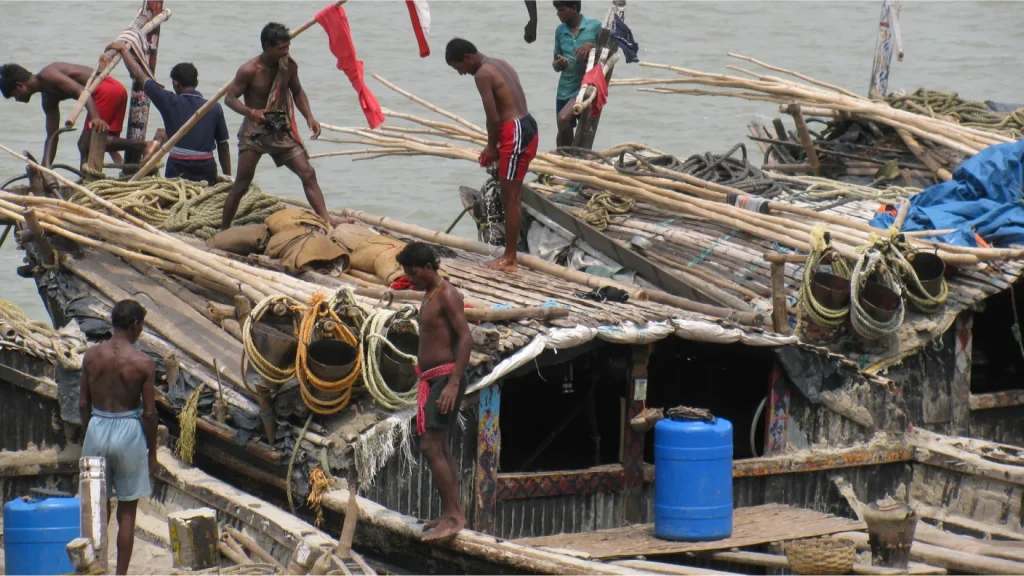
“Space management – Dredging tolls: an innovative equipment consisting of a bamboo pole, metal sheeted bucket and ropes.”
In the 1990s there were two boat building sheds in full operation mode at Ghusuri which no longer exist. ‘Bijay Babu’, one of the owners of sheds, informed that once Ghusuri housed around 250 pansi builders. The number of boat makers have dwindled and a few are still seen in repairing those old boats only as there is no new demand any more.
MAHAJONI
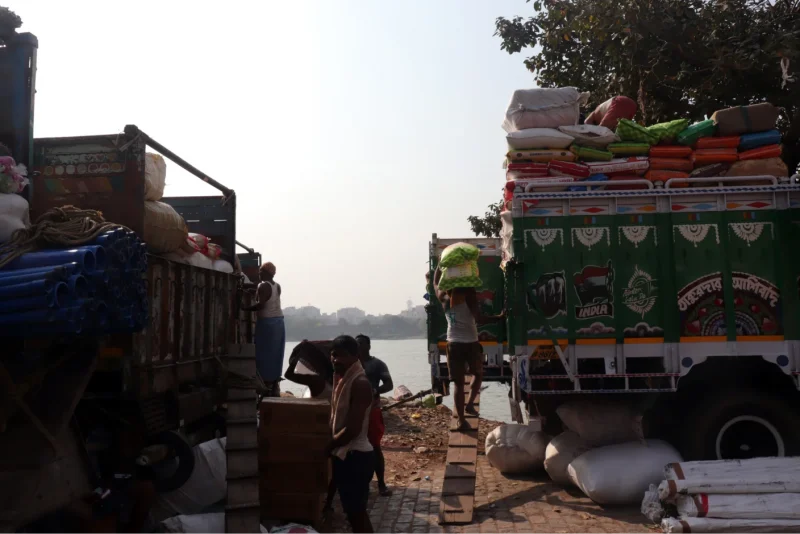
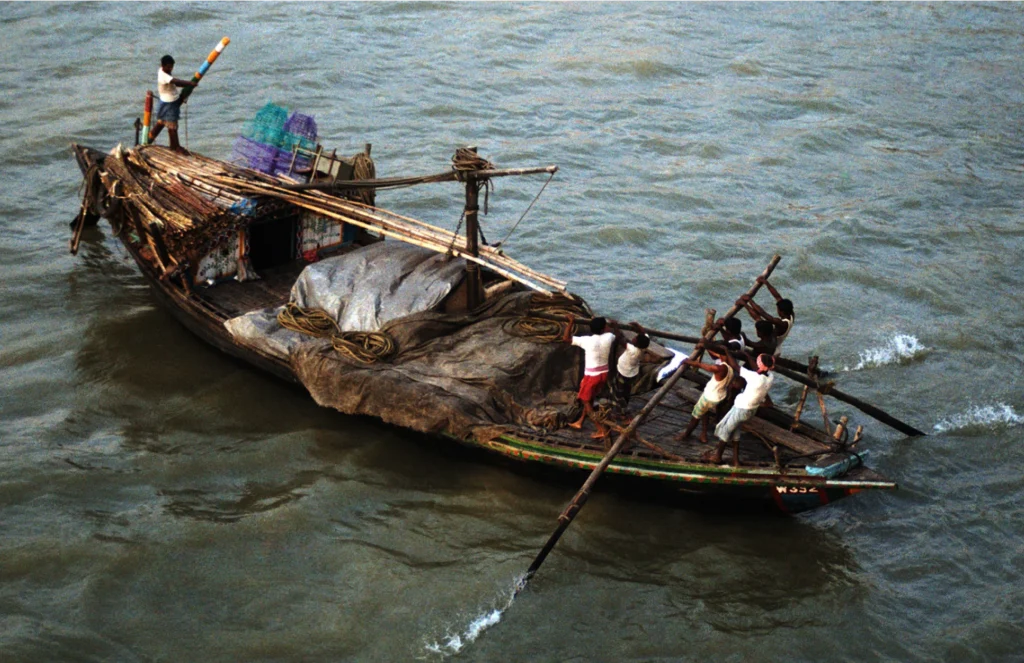
Boats which are used to carry various goods from wholesale market of Kolkata (Posta) are called mahajoni nouka. Carrying capacity of these boats are from 800 to 1500 mounds.
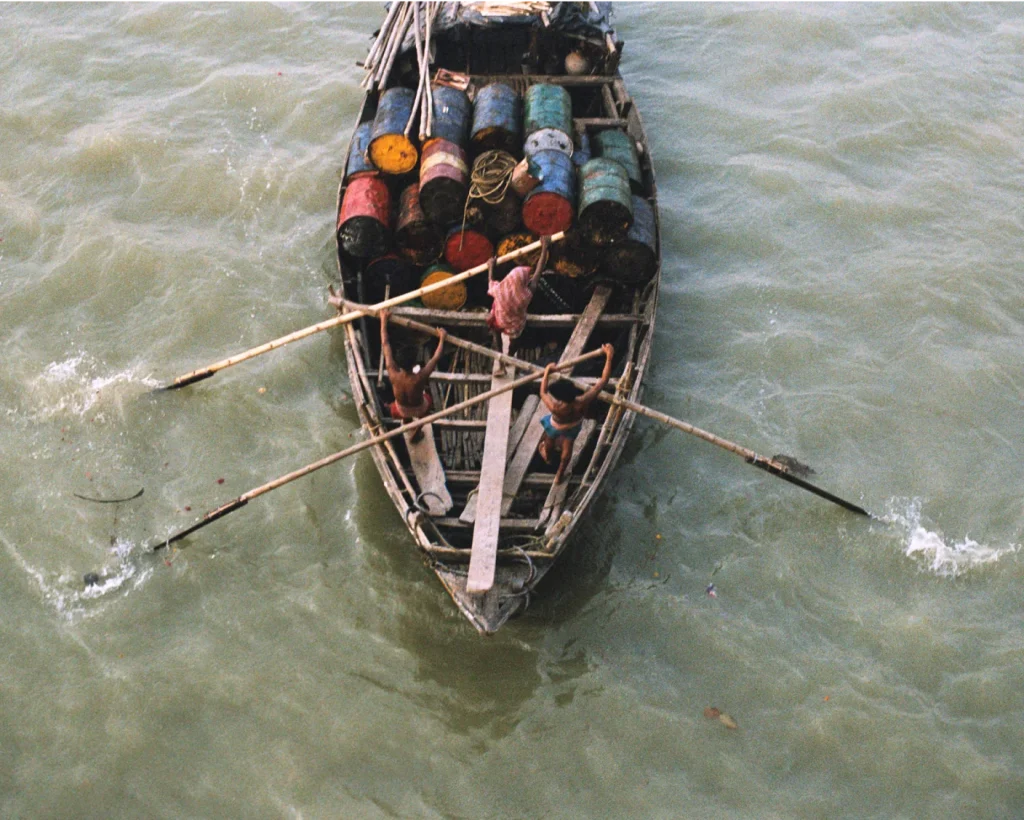
“Plank paths that has to be followed – The cargo is loaded in the midship portion. Propelling through oars. Note the shape of the boat.”
“While sailing not against the current ; Jal paal: water sail – A rectangular structure kept afloat on ahead of the boat. This unique mechanism gives extra acceleration to a boat floating along the current.”
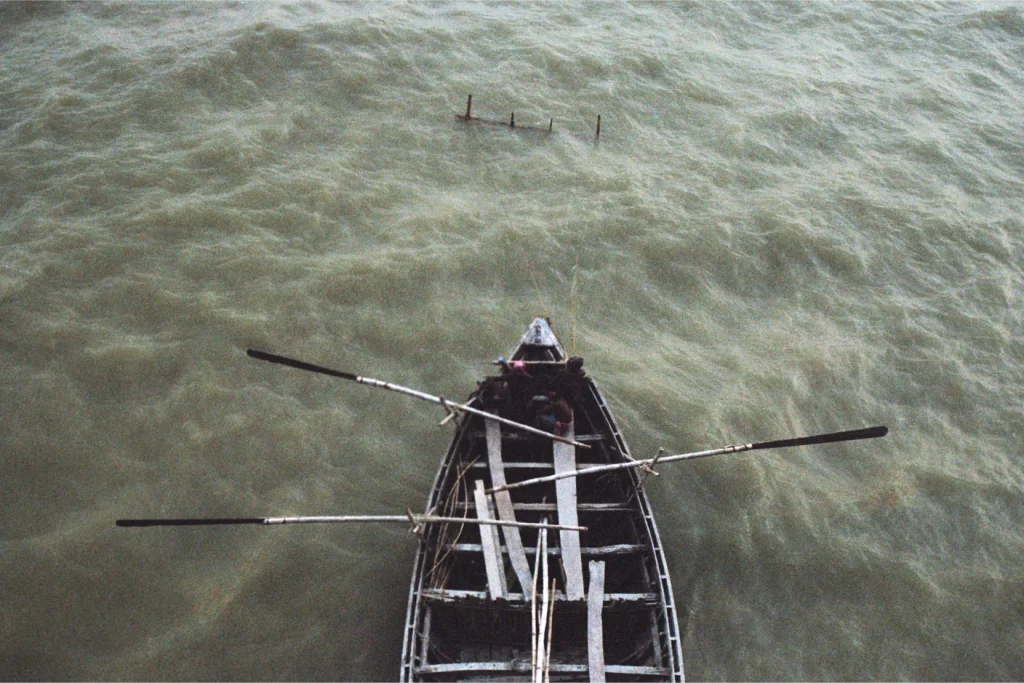
Earlier mahajoni boats were more in number and played an important role in transportation of goods from Kolkata to upstream (Shaorafuli, Srirampur, Chandannagar) and downstream (Uluberia, Bauria) in an economic mode.
JELE DINGI
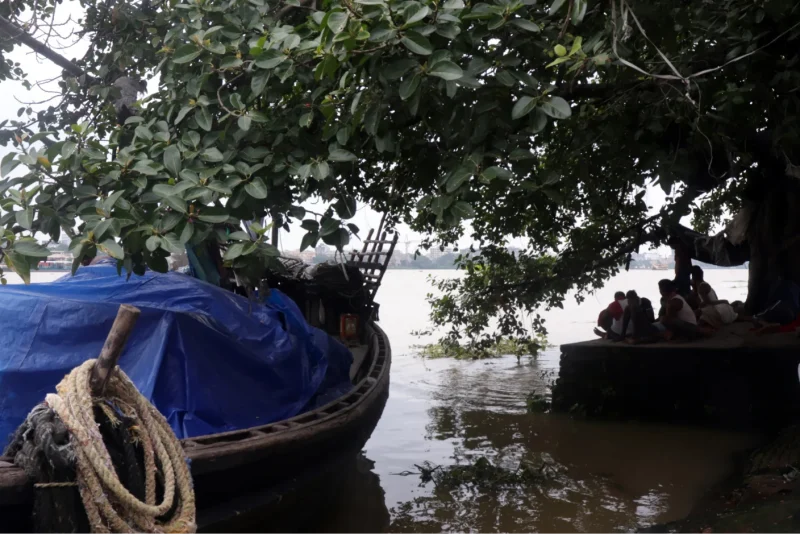
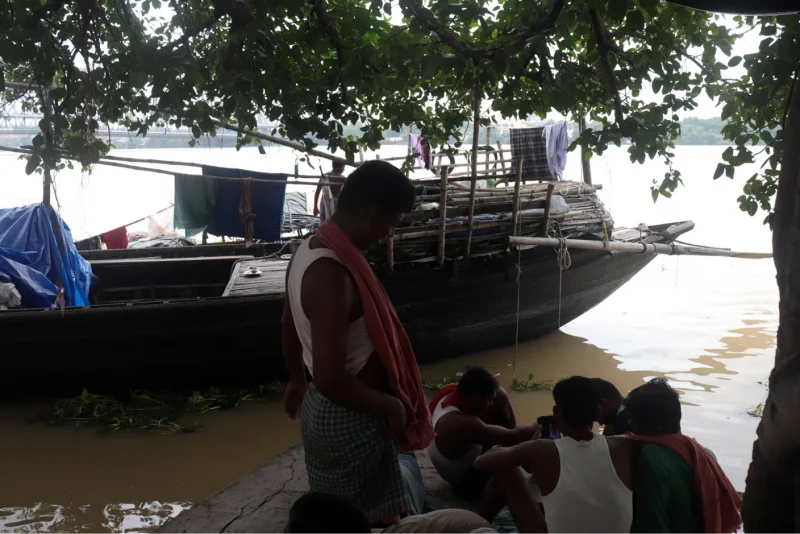
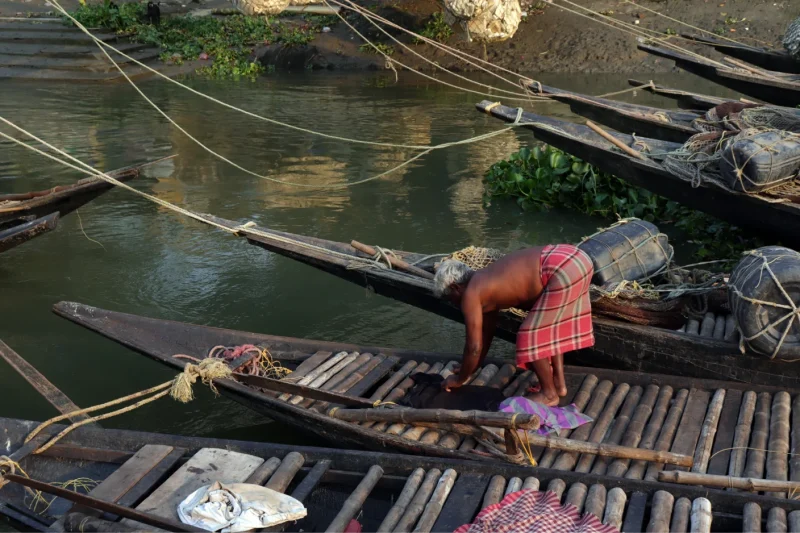
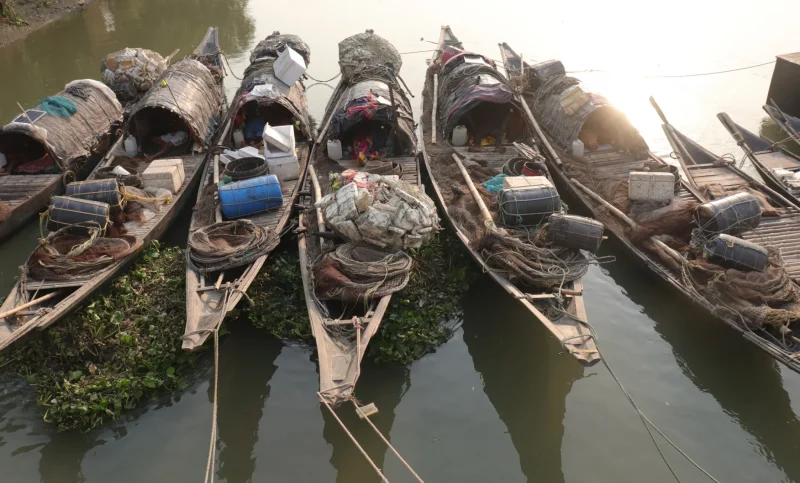
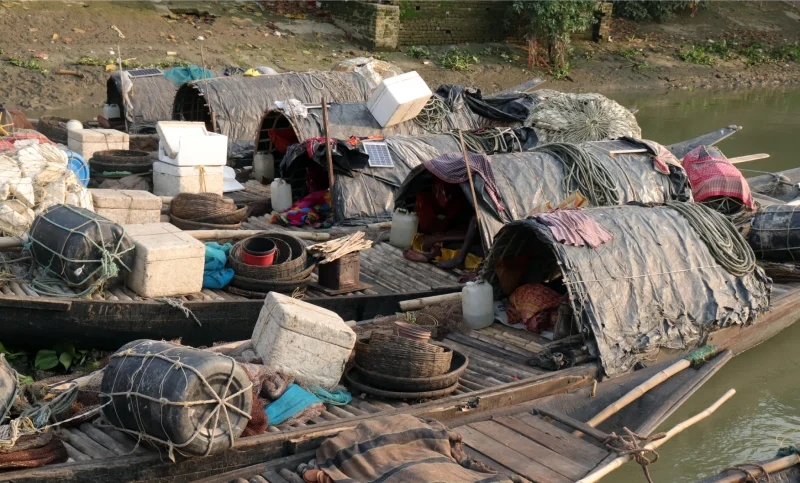
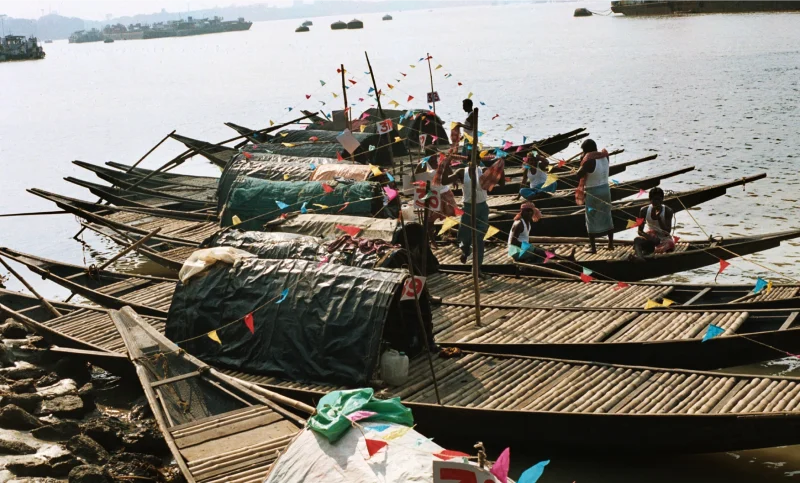
Dingi (an austric term) is an all purpose boat. A special typological variety of dingi used by the fisherfolk is called jele dingi. The width of dingi varies according to the amount of cargo it carries. But when it is used for fishing the shape becomes long and narrow. These are also shell built, spoon shaped, rabbeted and stapled boats.
Generally a small shed made of bamboo cane is used as a resting place on the boat. Jele dingi of Kolkata are generally 10 to 16 haat (one haat equals to 18 inches, measured from elbow to tip of the mid finger on working arm) in length.
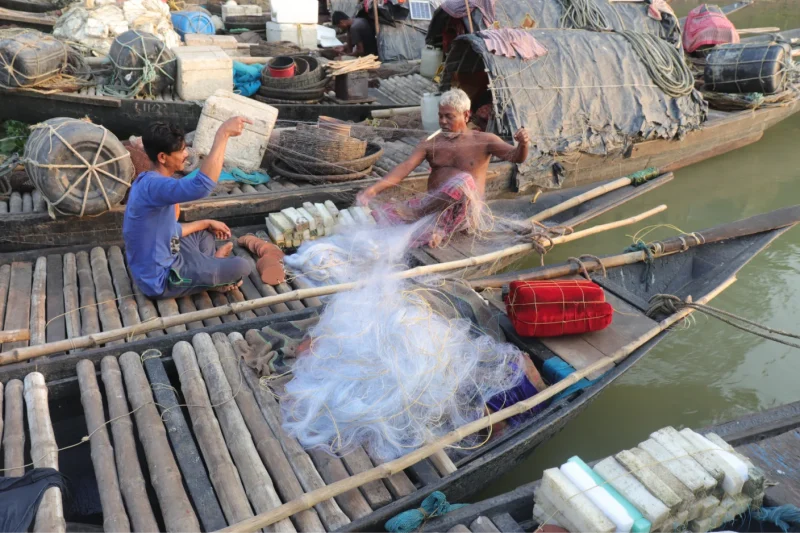
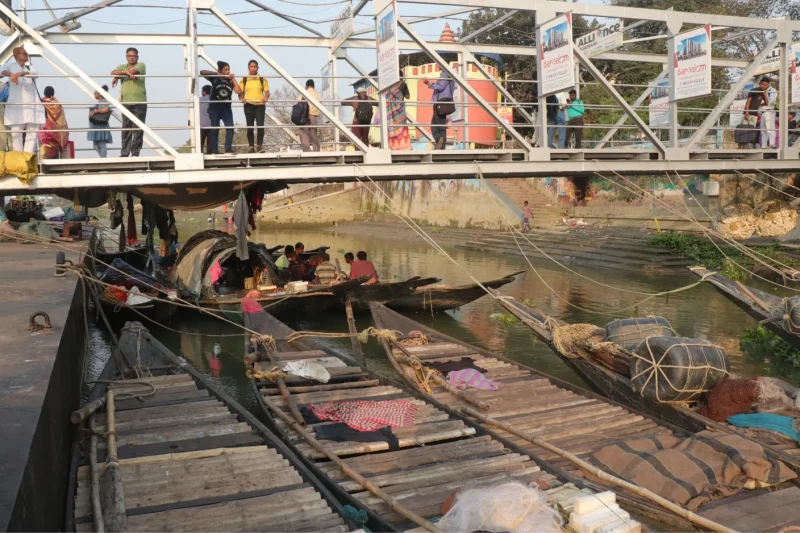
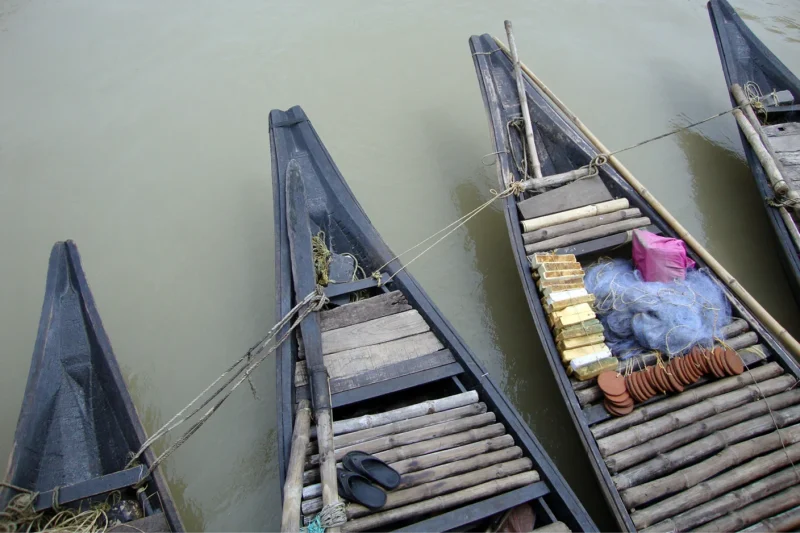
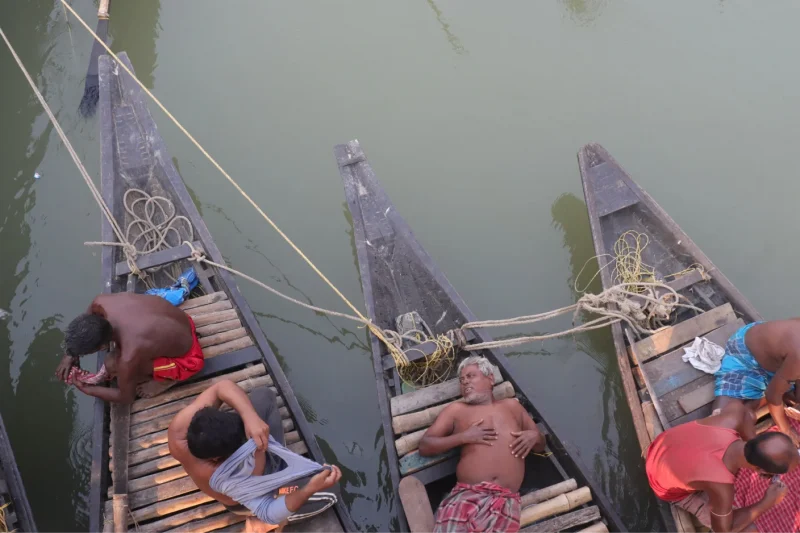
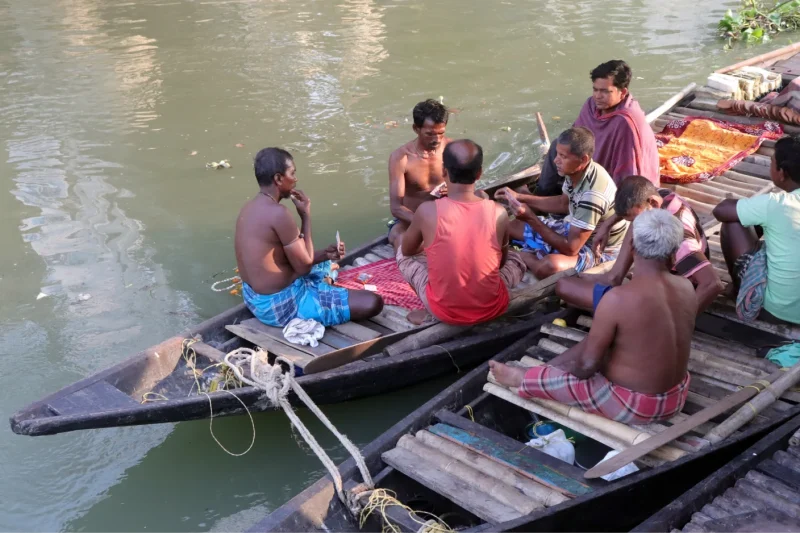
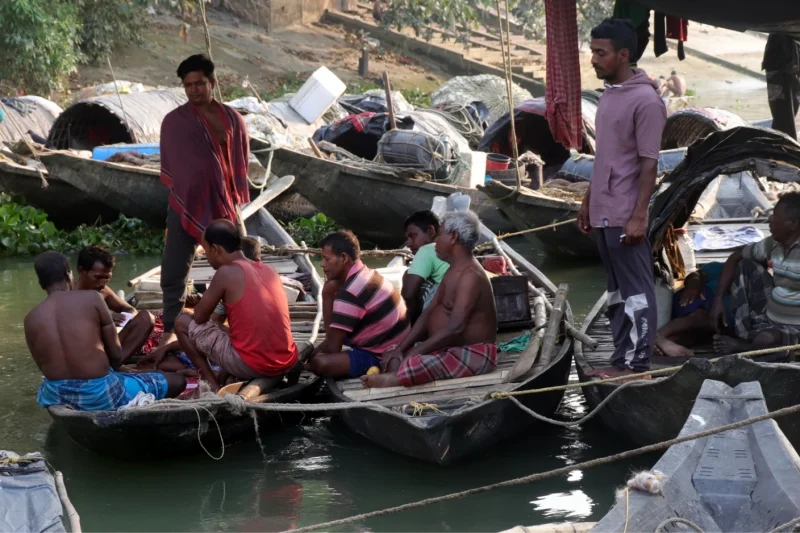
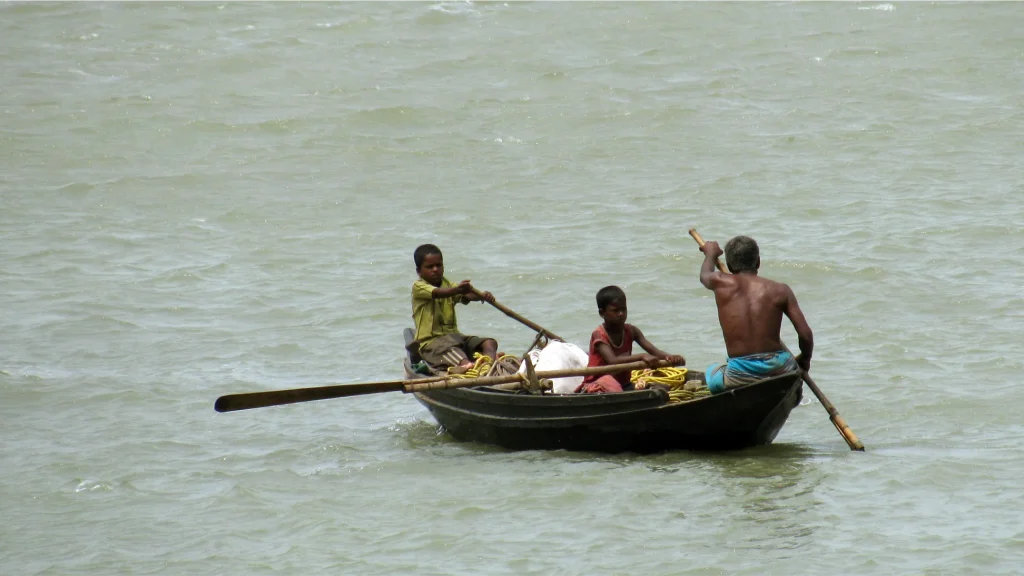
Fishing
Boat Life
Mooring Site
Trump Card
JELE BACHHARI
A shell built stapled and rabbeted fishing boat used in lower Gangetic delta. Long and elongated shape of the boat is equipped with various types of fishing nets and gears and generally it is 28 to 32 haat in length. These boats are also used in Kolkata for fishing, but the fisherfolk who use them hail from Baduria of North Twenty Four Parganas.
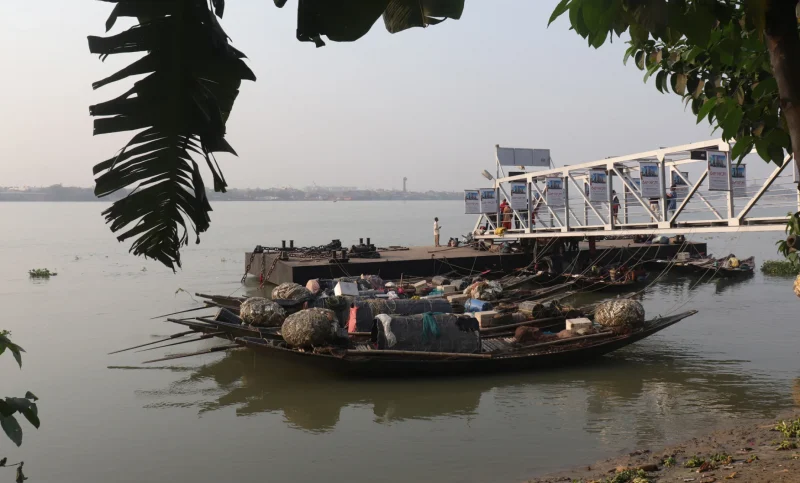
KHOROKISTI
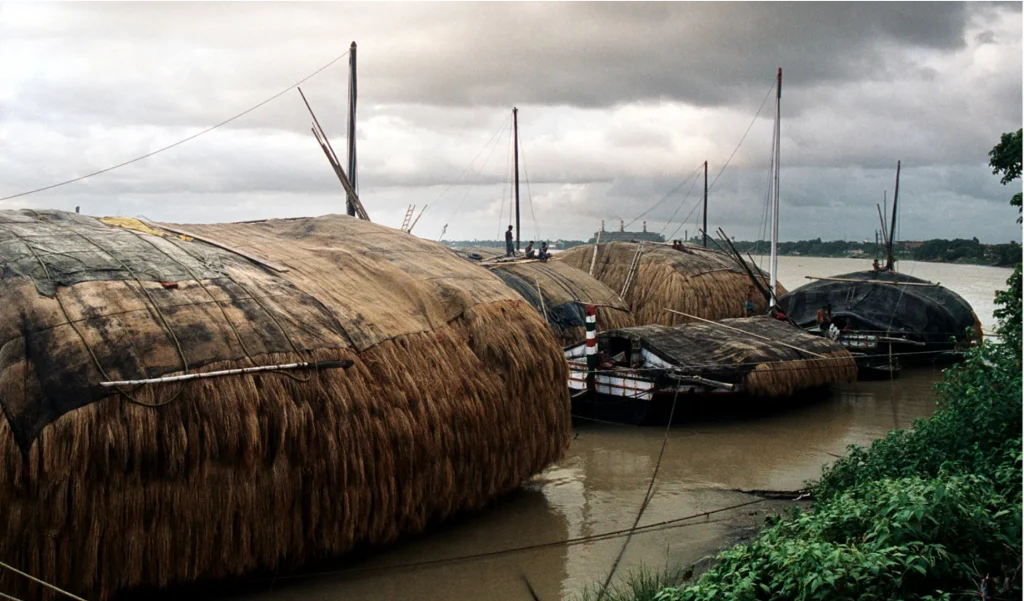
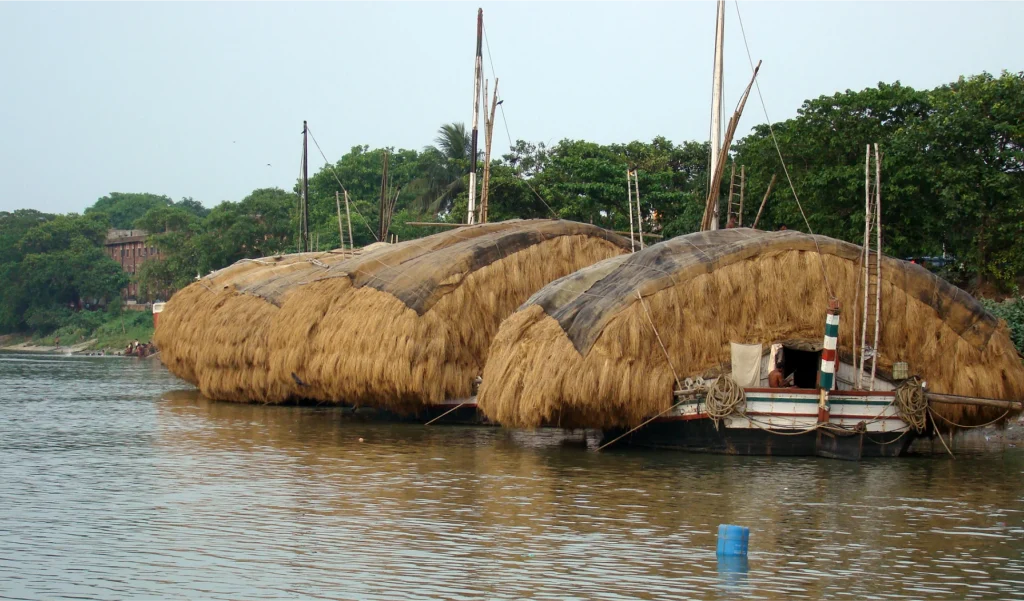
Khorokisti, a skeleton built straw carrier of Lower Bengal is fifty haat (1 haat=1.5 feet) in length and fifteen haat in width. Khorokisti used to ply from Geonkhali of Medinipur district to Sundarbans to load 350 to 400 kahon (a unit to measure the amount of straw) of straw which they unloaded in different parts of Kolkata. This boat is propelled by the lug sail (the lug sail, is a four-cornered quadrilateral shaped, fore and aft sail. This sail evolved from the square sail and its shape is between the lateen sail and the square sail) when it moves without cargo. As the fully loaded khorokisti could not move independently with sail, a small boat called chhot was used to tow it along. Chhot was later replaced by motorized boats. Unfortunately Bengal has lost khorokisti.
SULTANI
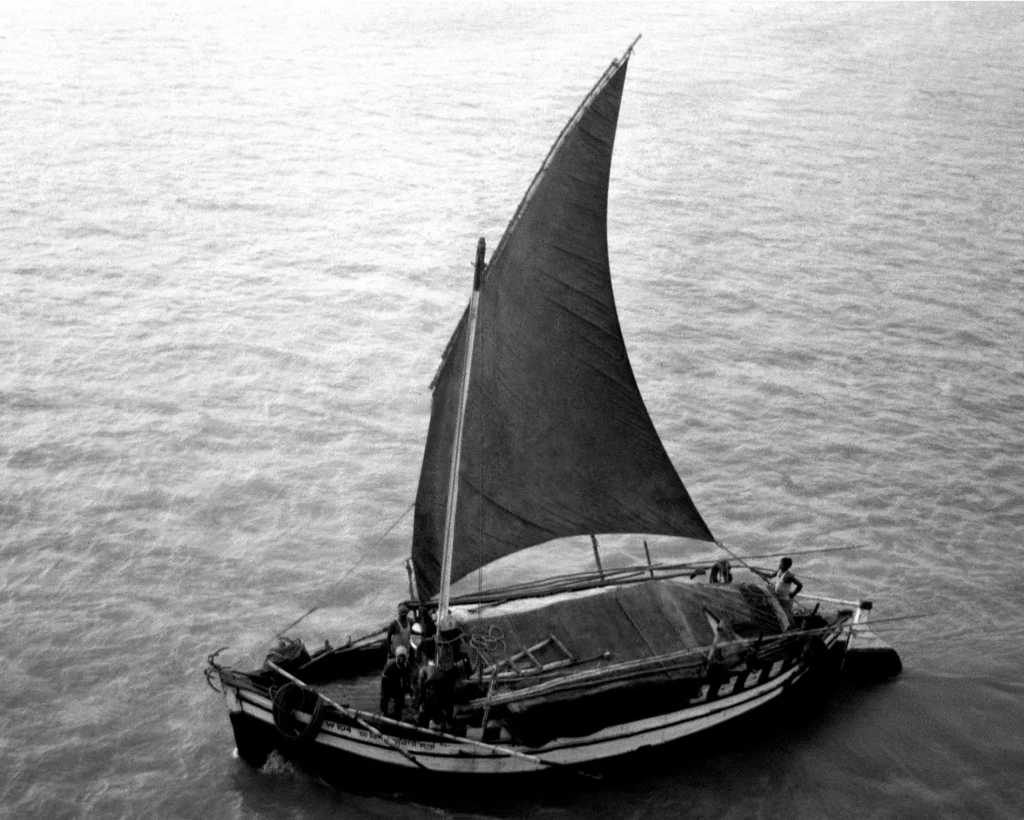
Sultani, is a cargo boat of the lower Gangetic delta with carrying capacity ranging from 1500 to 3000 maunds.
Sultani is built even at present but its dimension has increased. It has become motorized so mast and sails are no longer in use. Sultani used to cater cargo to Kolkata from Sundarbans.
CONCLUSION
Pompous Kolkata earned her crown because of a river. Bengal’s wealth infiltrated with the tidal waves along the water channels. Thus, commodities from eastern India could have easily been stacked in the warehouses of Kolkata along the course of the Ganges through boats. The East India Company exported those exotic goods to the far lands of Europe and America and looted the gross profit from it.
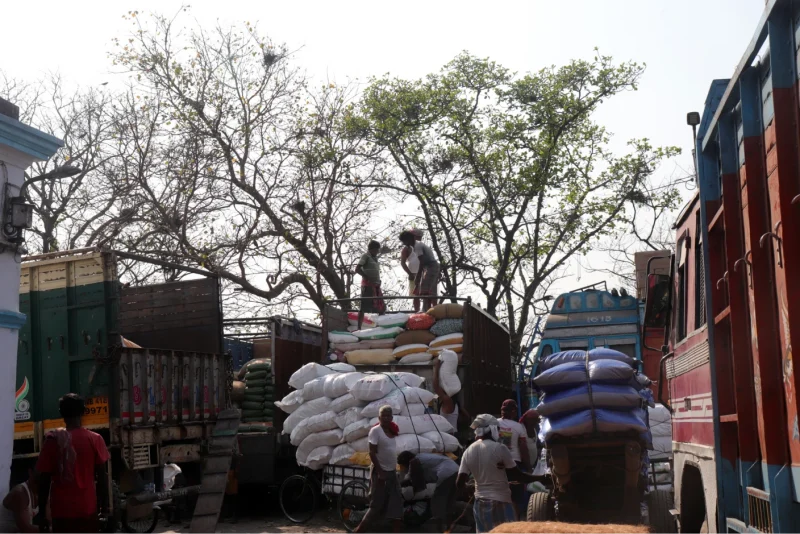
The once vibrating riverways have dwindled to a mere water channel at present. No longer are the trading commodities being carried along to and fro, neither can we see any gorgeous traditional pleasure boat sailing on it. We are about to obliterate the easiest, economic, eco-friendly transport system. Around 1950 the vast number of boats that used to ply on the river of Kolkata has reduced at present to a meagre number reaching the verge of near extinction. Even in 1990 Kolkata witnessed several boats pass by with flying colourful sails, carrying commodities along up and downstream. But at present there are none. Only a few boats with diesel engines nowadays are seen to carry goods in-between Posta (Barabazar, Kolkata) and Uluberia (Howrah).
These mahajani noukas (merchant boats) are counting their days of extinction. The bhanr, steered by Sudeb majhi (helmsman), is no longer in use. The owner of this boat is Shyam Babu and the boat is lying idle with him for a long long time. The irony is, when Shyam Babu’s next generation i.e. his daughter decides to reuse the lohasaal (a kind of exceptionally good wood) of the bhanr boat in making furniture. This has become the fate of Kolkata’s only bhanr boat. Though pansi boats are still in use carrying and lifting sands from the river bed instead of salt for which they were veteran. Thus, the character of work has changed for pansi. Sultani of Nurpur (South 24 Parganas) has stopped her visit to Kolkata.
Jele dingi of Jagannath Ghat has diminished drastically in number though a few of them are still seen fishing. Buddha da, a traditional fisherman, is no longer interested in fishing. He has left his principal occupation of fishing and nowadays sells fish in the local market. The son of boatman Bhola is no longer interested in his family occupation of fishing, he is rather busy in searching other jobs. Hulo, the fisherman of Bagbazar still goes for fishing with his 30 haat jele bachhari and casts net and rarely catches the exotic Hilsa. In-spite of living in immense poverty he still hopes for a better future with a thread of underlying doubts.
Will the boat become extinct in the near future? In reply Nimai Barick a skilled 70 years old boat maker says, “as long as water is there, there will be boats”. A holistic approach is inevitable in order to maintain the water resources we have or else we are sure to lose the enriched riverine culture of River Ganga in no time.