

Introduction
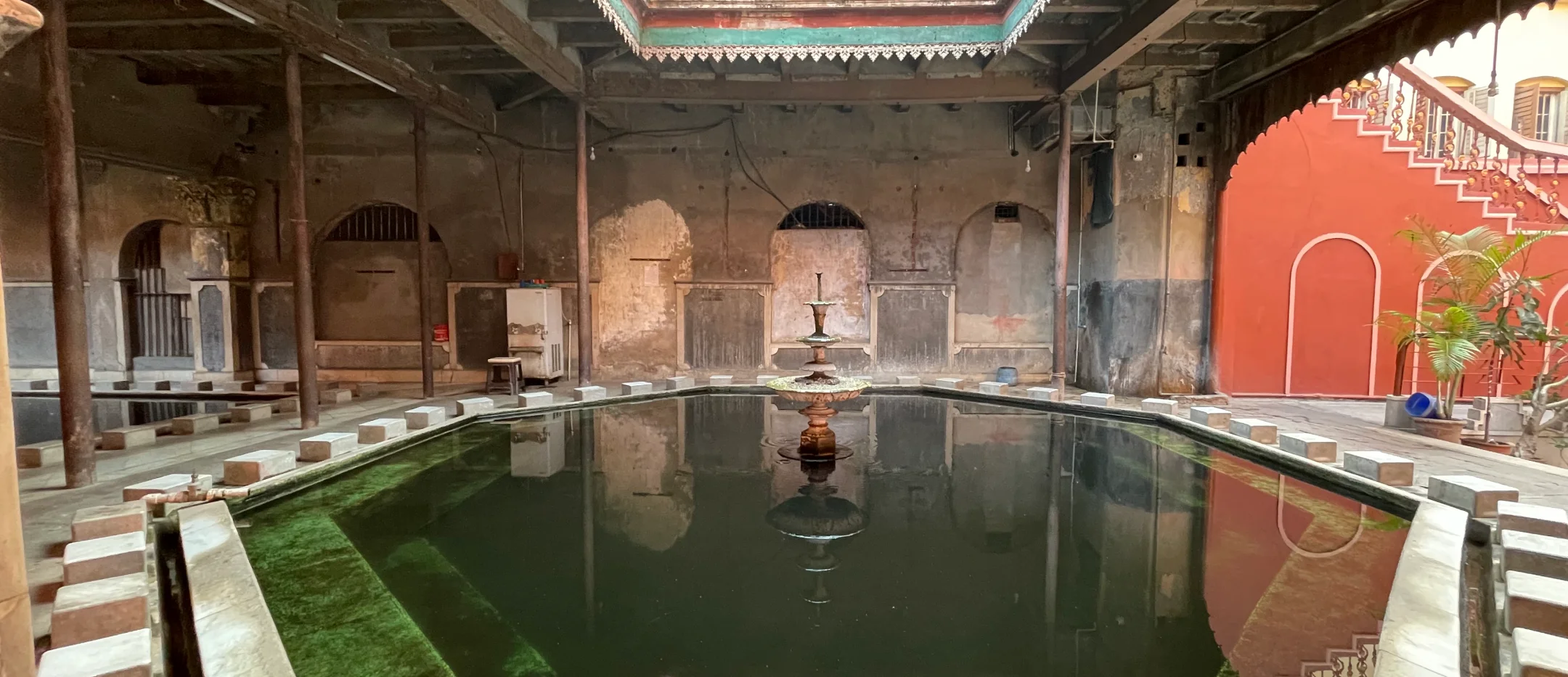
Kolkata, the former capital of British India and the cultural hub of the country, is a city that boasts of many historic monuments and landmarks which reflect its rich and diverse heritage. Among them, the fountains of Kolkata are a lesser known but equally fascinating aspect of the city’s history and beauty. These historic fountains, which date to the colonial-era, have added charm and elegance to the city’s landscape, provided water and contributed much to the health and sanitation of its people, as well as helped in remembering the cross-cultural diasporic significance of the city.
“While the city is replete with some marvellous examples of such fountains, this story will talk about three public drinking water fountains that are unfortunately defunct, because of which they go unnoticed, despite having thousands of people passing by every day.”
Drinking Water for All
Lionhead Water Fountains
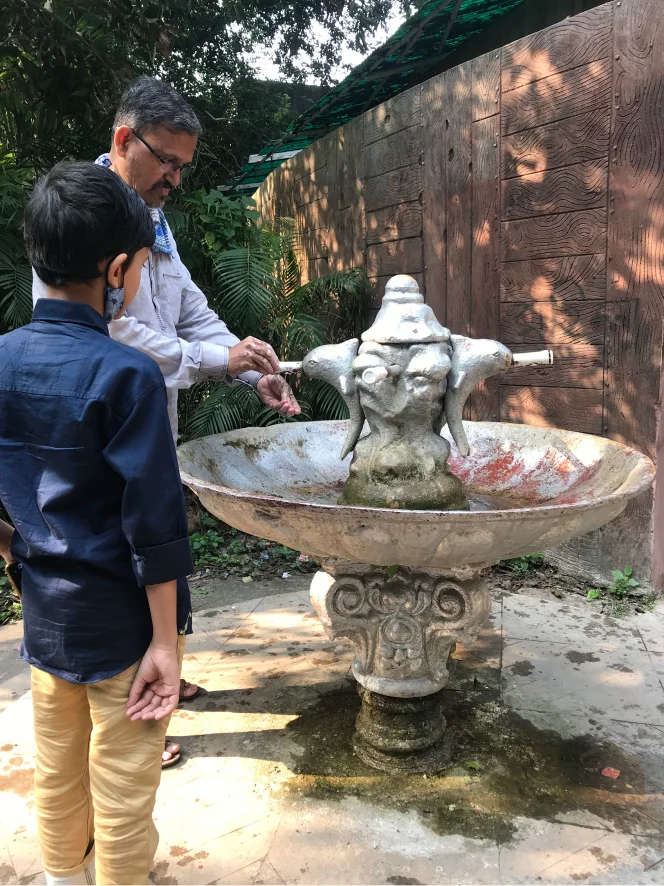
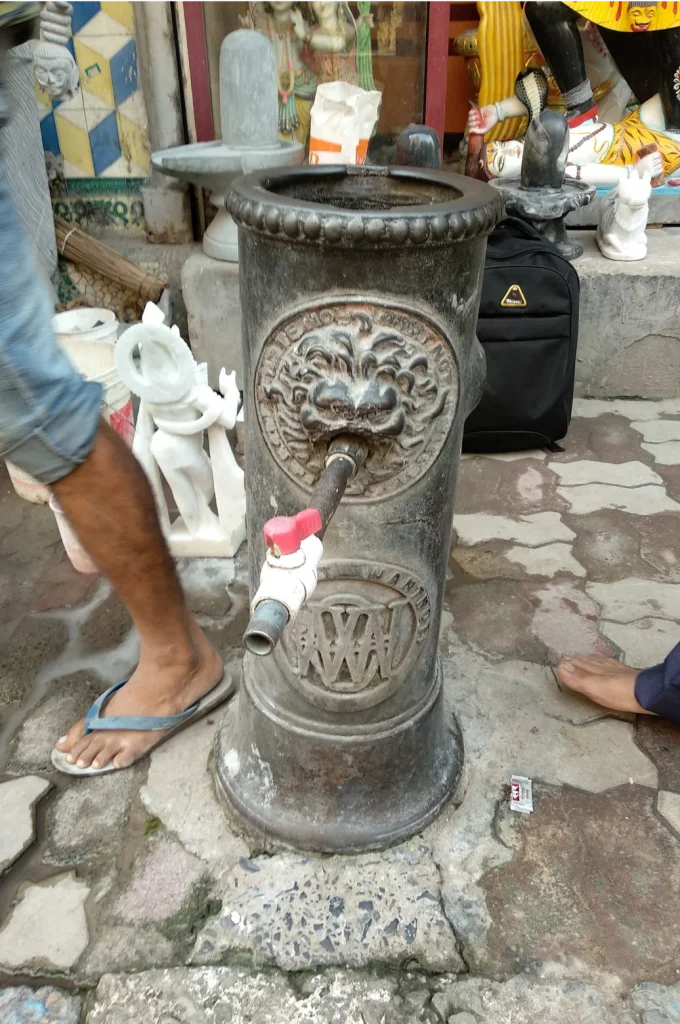
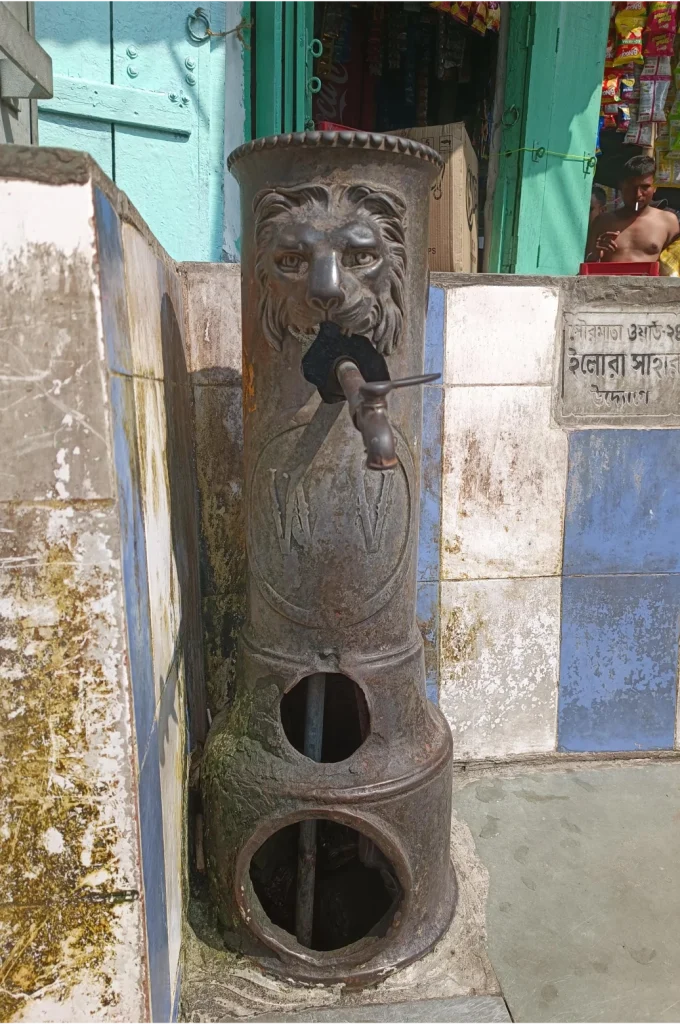
The first is a group of fountains that were inspired by the Greco-Roman motifs and can be found mostly in the older neighbourhoods of the city even today. In order to supply clean water to the citizens of Calcutta around the 1870s, the British constructed these taps, which resemble pillars with sculptured lion heads. Initially, these iron taps were manufactured by a ship building company named Alley & MacLellan in Glasgow and were earlier imported from Scotland until they were manufactured locally.
Prior to these fountains,, the holy Ganga, which was gradually getting polluted due to uncontrolled human activities, was the only supply of water for drinking and bathing. The Hooghly River, a tributary of the Ganga, was connected to the lion taps by a system of pipelines that distributed water to different areas of the city after passing through an upflow/downflow gravel filtration process. Outlets to these pipelines are seen even today in various parts of the city with hundreds collecting water for domestic purposes.



“The British wrote an imperial decree that said “Waste Not, Want Not” and in some cases the same in Bengali that read: “আপচয় করোনা, অভবো হোবেনা” on the taps to dispel these tales and avoid the wastage of water.”
The presence of the lionhead taps demonstrated the British government’s concern for the welfare of those who required greater hygiene. Some social groups, however, opposed them and harboured misgivings about them because they thought the tap washers were made of cow or pig skin, which insulted their religious sensibilities. Others believed that the water from the lion’s mouth was not as holy as the Ganga water. The British wrote an imperial decree that said “Waste Not, Want Not”, and in some cases especially for the fountains made later, the same in Bengali that read: “আপচয় করোনা, অভবো হোবেনা” (Opochoy Korona, Obhab o Hobena) alongside the logo of the CWW (Calcutta Water Works) on the taps to dispel these tales and avoid the wastage of water. These lionhead taps have contributed much to the aesthetic character of the then colonial capital with a touch of the British Royalty to the city’s landscape, blending with the architectural styles of the various buildings and monuments alongside the riverfront. Today most of these taps remain broken and while the water supply pipes still remain, they either function independently right beside these fountains or are extracted through the mouth of the lionhead in an unappealing way due to the lack of workmanship. These fountains can be spotted even today hidden amidst the busy activities of Kolkata, and remind us of the living relationship that exists between the city’s river and its people.
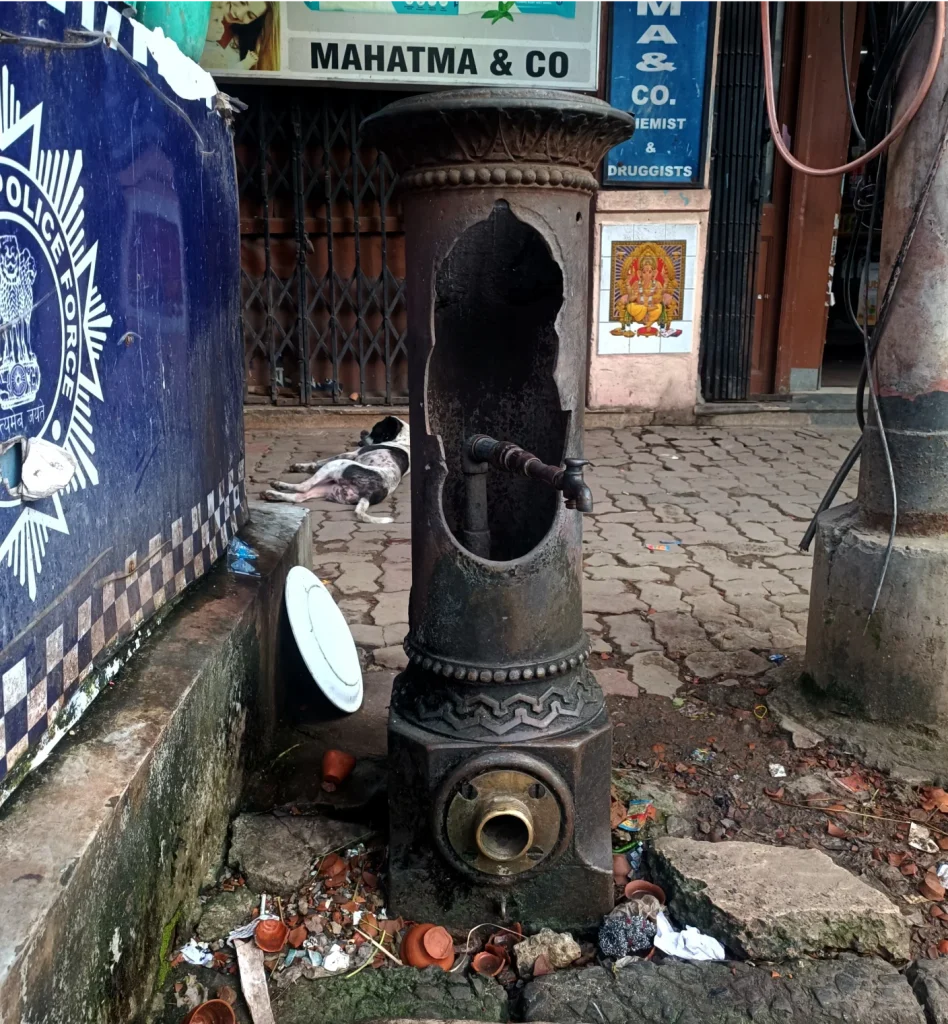
Lionhead fountains in different parts of the city in current times
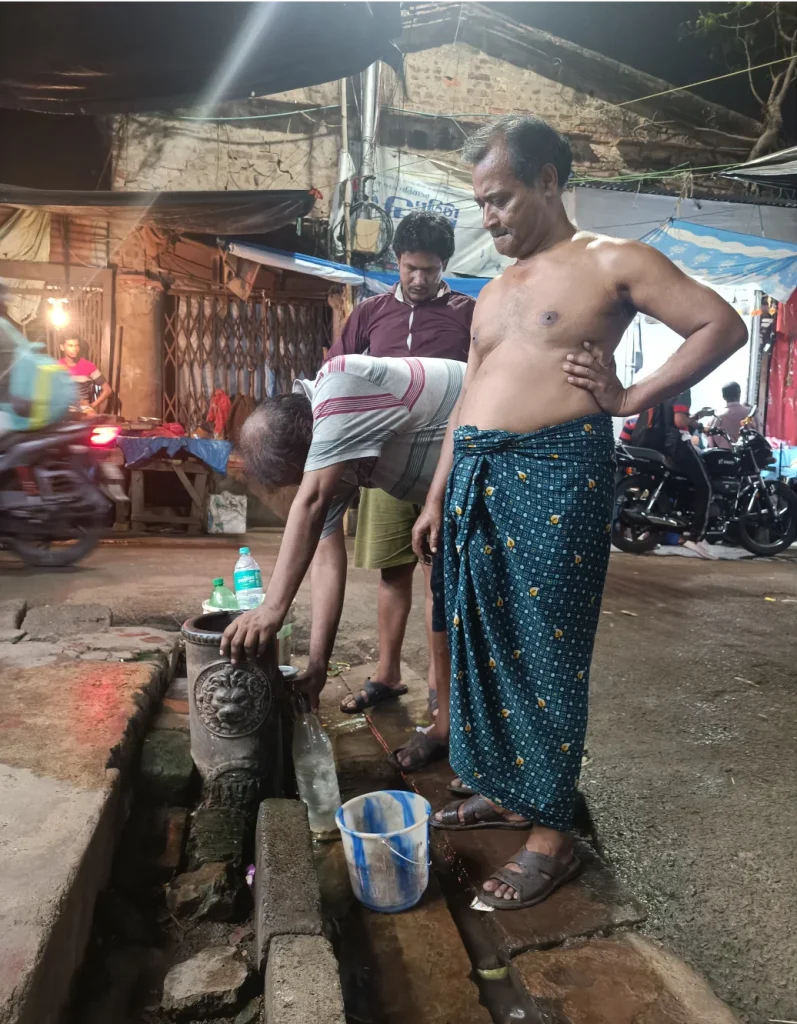
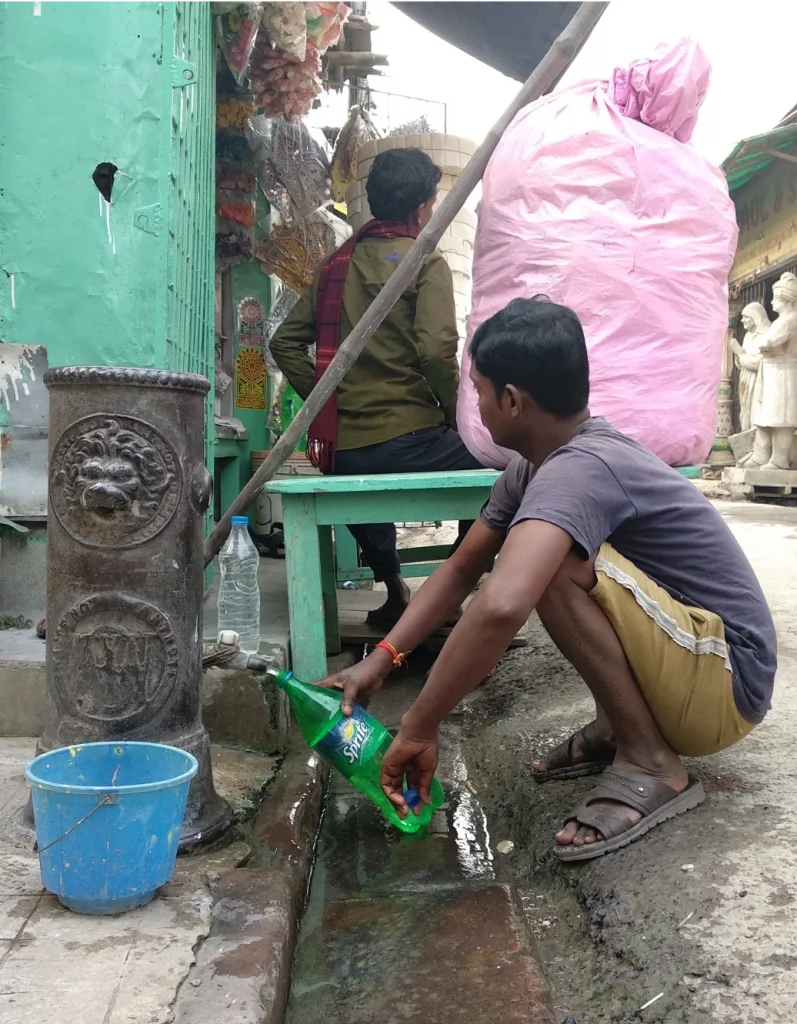
“Back in the days, urban planning was very systematic water fountains were designed in a way that for every few hundred yards they would also have the provision of fire water systems. Although damaged, this is one of them still standing at Jorasanko, Kolkata”
Panioty Fountain
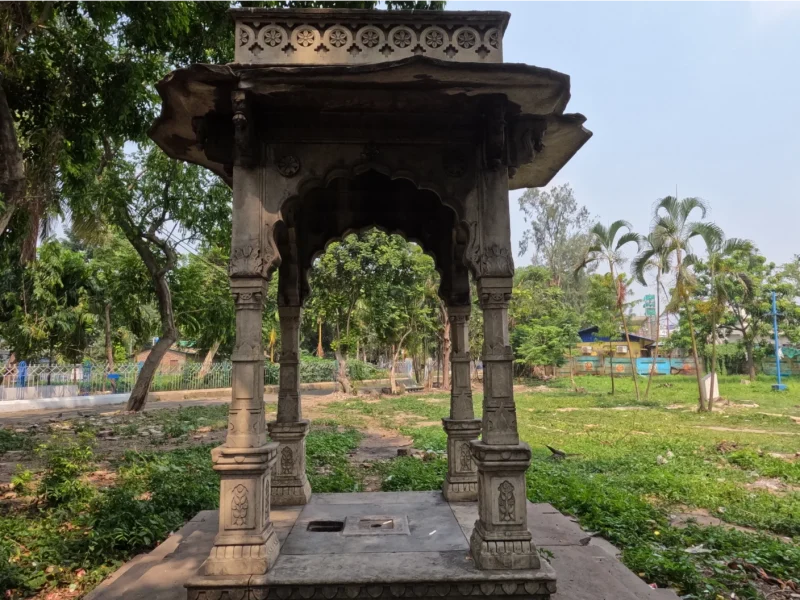
The second fountain is the Panioty Fountain. Located in one of the most crowded locations of the city at the north-west corner of Curzon Park aka Surendra Nath Banerjee Park, which today is known as the Bhasha Udyan; situated right opposite the east gate of the Raj Bhavan and the southern side of the Esplanade Mansion.
The Panioty Fountain is a marble drinking water fountain installed in 1898 at the junction of Old Court House Street and Esplanade Row, in memory of Demetrius Panioty, who belonged to a family of Greek traders in the country and became an assistant private secretary to several Governor Generals of India. After his death in 1885, this drinking water fountain was commissioned by Lord Curzon in the year 1898 as a memorial for his contributions towards the Indian Empire.
“The Panioty Fountain is a marble drinking water fountain installed in 1898 at the junction of Old Court House Street and Esplanade Row, in memory of Demetrius Panioty.”
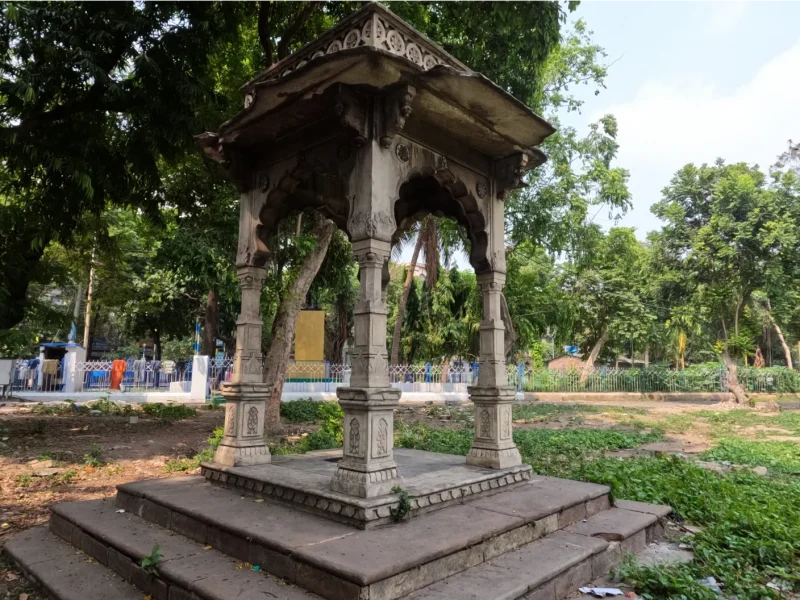
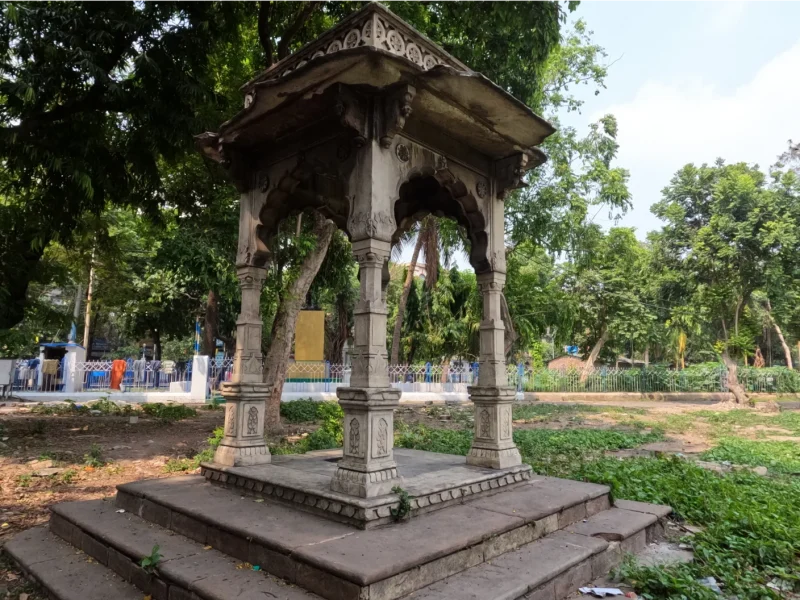
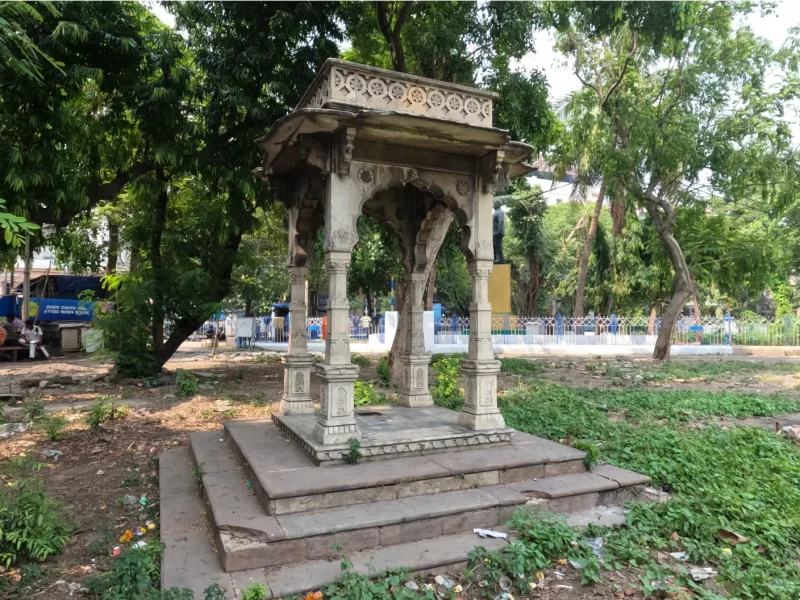
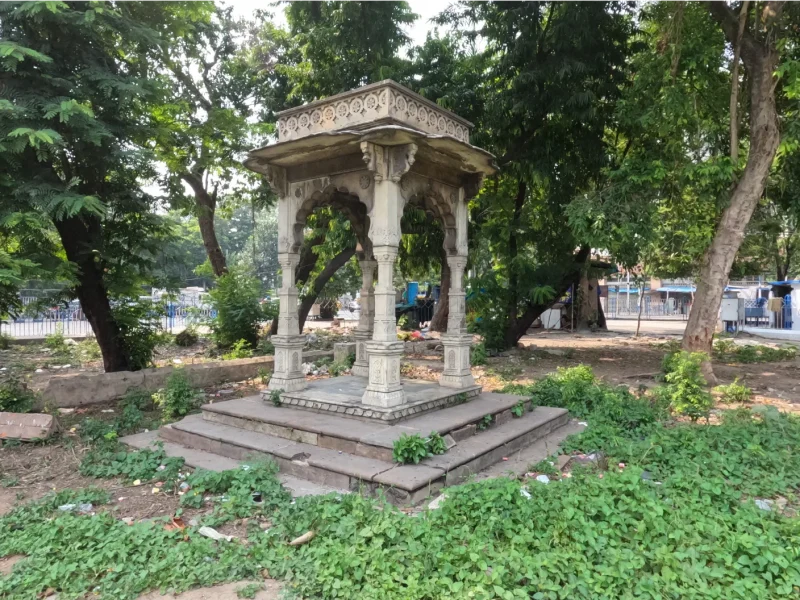
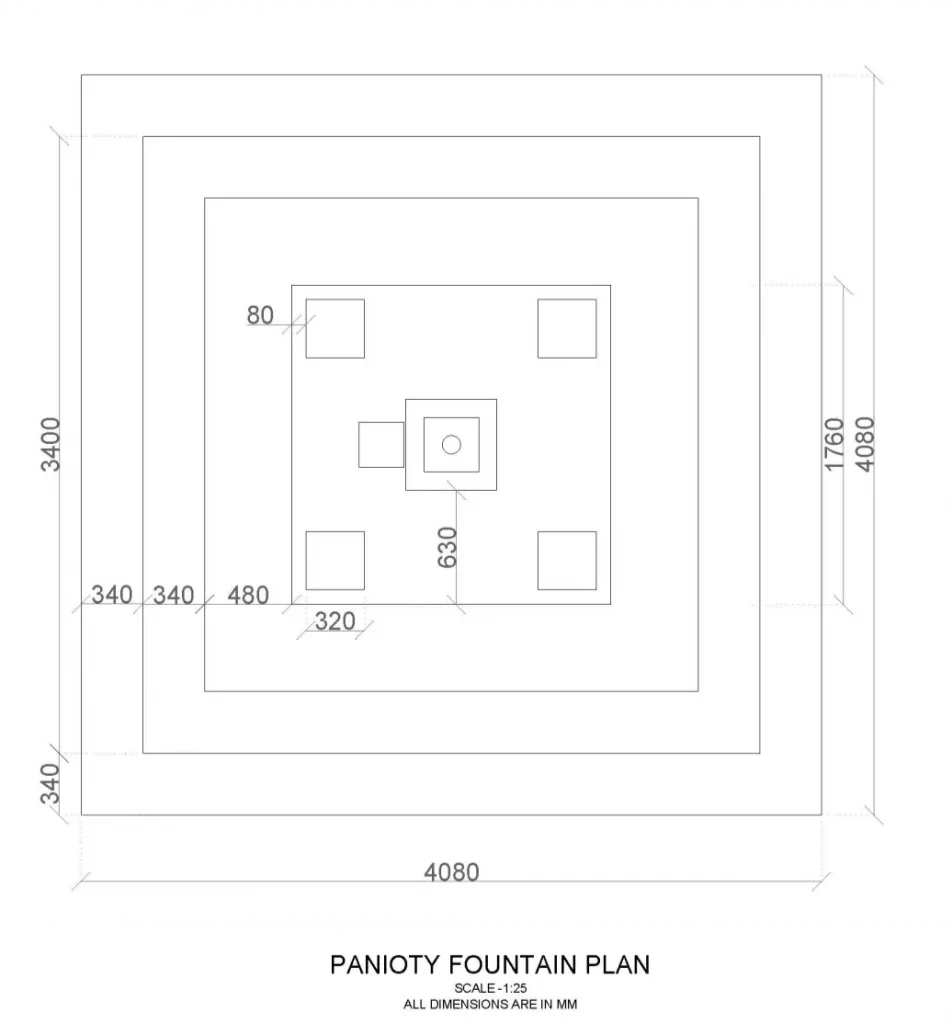
Measured Drawings of the Panioty Fountain – Gangotri Ganguly, Arindam Roy
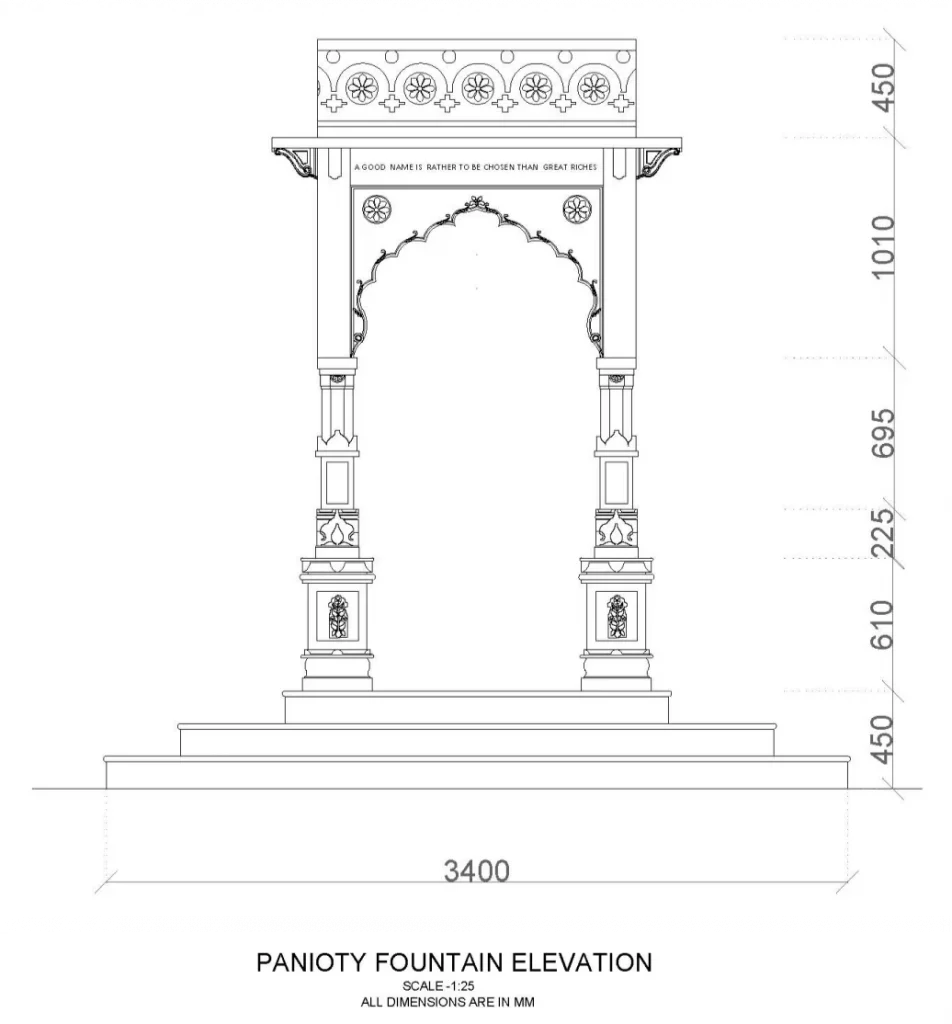
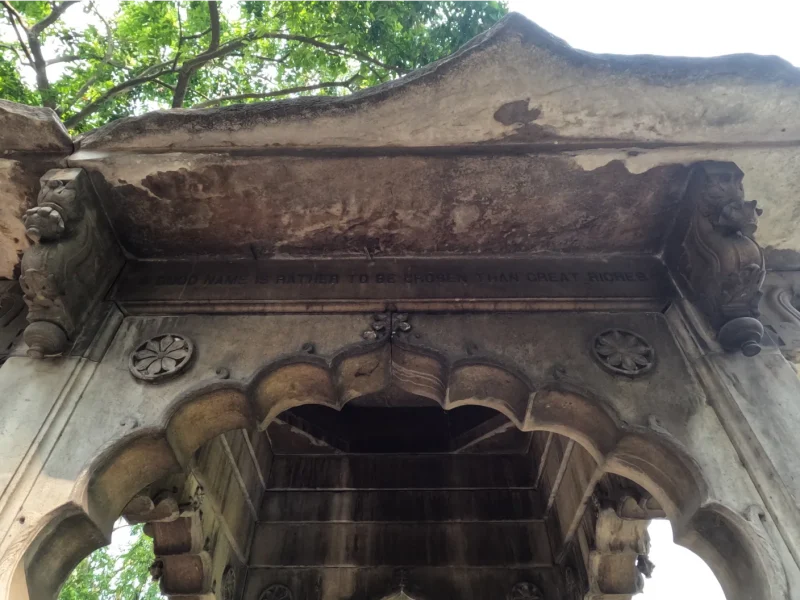
“The western arch of the monument is engraved with a proverb from the Bible that reads “A GOOD NAME IS RATHER TO BE CHOSEN THAN GREAT RICHES.””
The fountain is built in the form of a Mughal pavilion with nine-foiled cusped arches on each of its four faces and beautiful motifs on each of the four columns. The western arch of the monument is engraved with a proverb from the Bible that reads “A GOOD NAME IS RATHER TO BE CHOSEN THAN GREAT RICHES.” In the year 1958, this monument has been seen as a backdrop in ‘Parash Pathar’ (The Philosopher’s Stone) one of the most well-known films by Satyajit Ray, and it is all the more relevant because it was at this monument that the main protagonist of the film played by Tulsi Chakraborty, had found the philosopher’s stone.
Panioty Fountain as seen in Ray’s ‘Parashpathar’
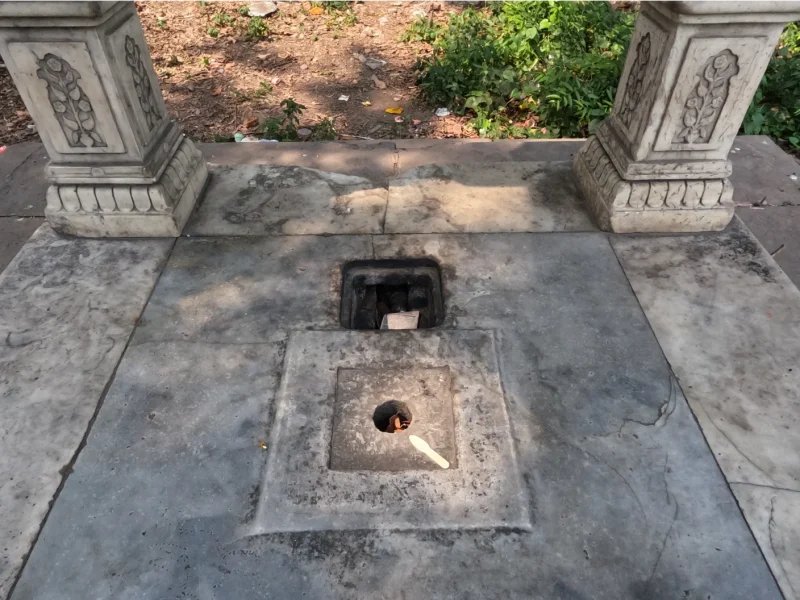
The fountain unfortunately is in a very sorry state today. There is a significant amount of structural damage especially on the overhanging eaves and signs of organic growth has been seen on various surfaces. The fountain is often occupied by miscreants as evidence of graffiti and firewood in the inlets of the fountain were seen during our inspection. Due to lack of maintenance, the surrounding area is often covered with uncontrolled growth of trees and creepers making the fountain vulnerable especially during storms which are quite frequent in the city. Nonetheless, the fountain is listed as a grade 1 heritage structure in the list of Heritage Buildings of Kolkata developed by the Kolkata Municipal corporation and contributes to the rich water heritage of the city.
A 3D Model Walkthrough of the Panioty Fountain
Panioty Fountain 360 images
McDonnell Fountain
“The fountain is a fine example of the Gothic revivalist style, with a floral capitol on its apex and a lion’s head on the front.”
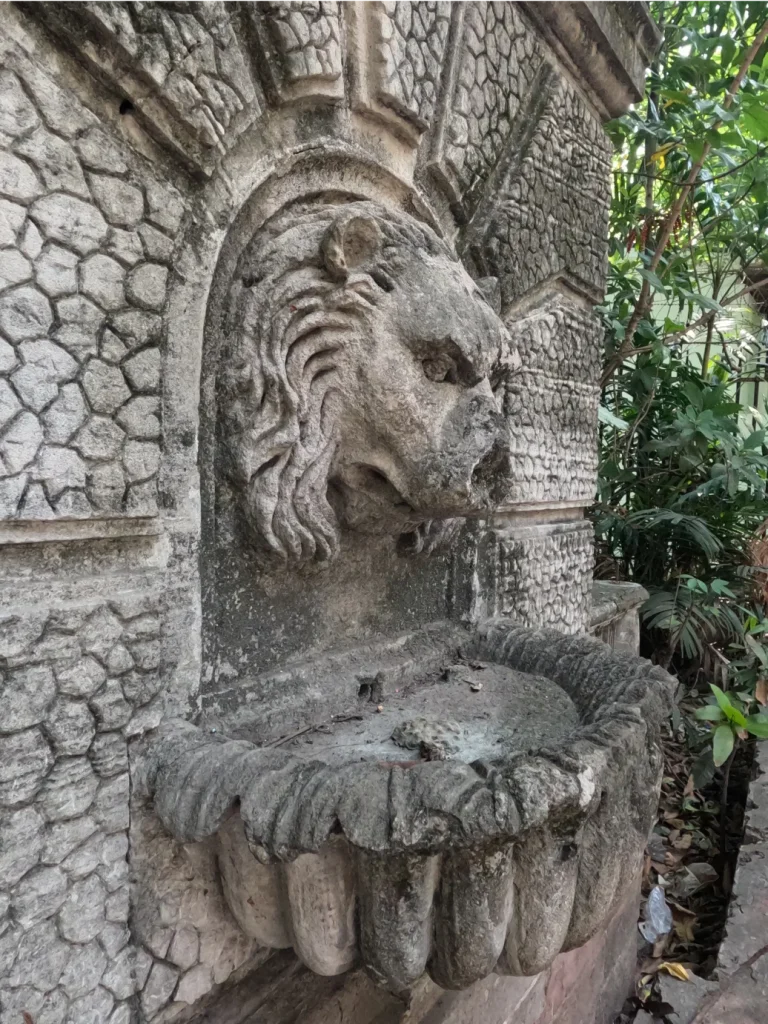
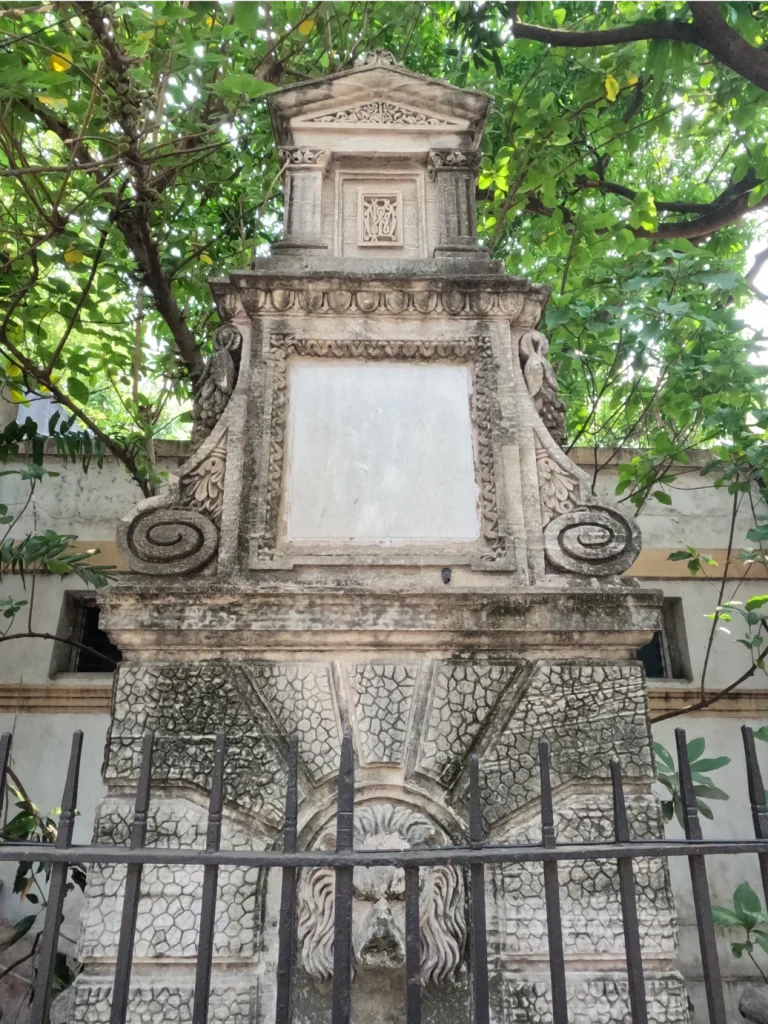
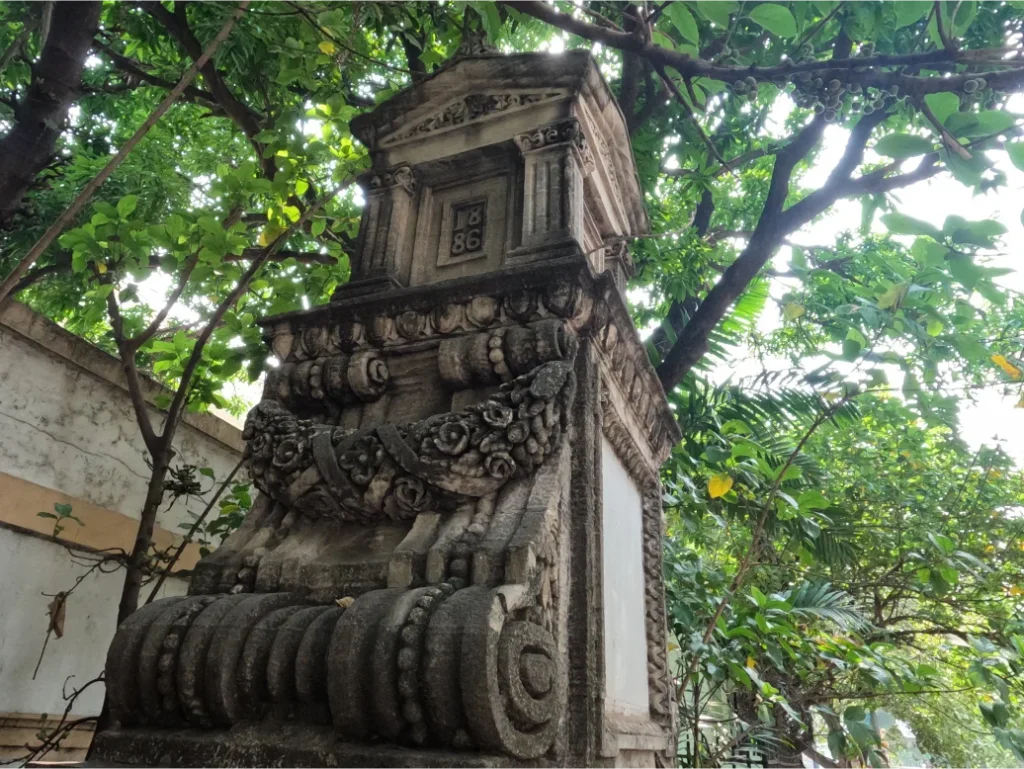
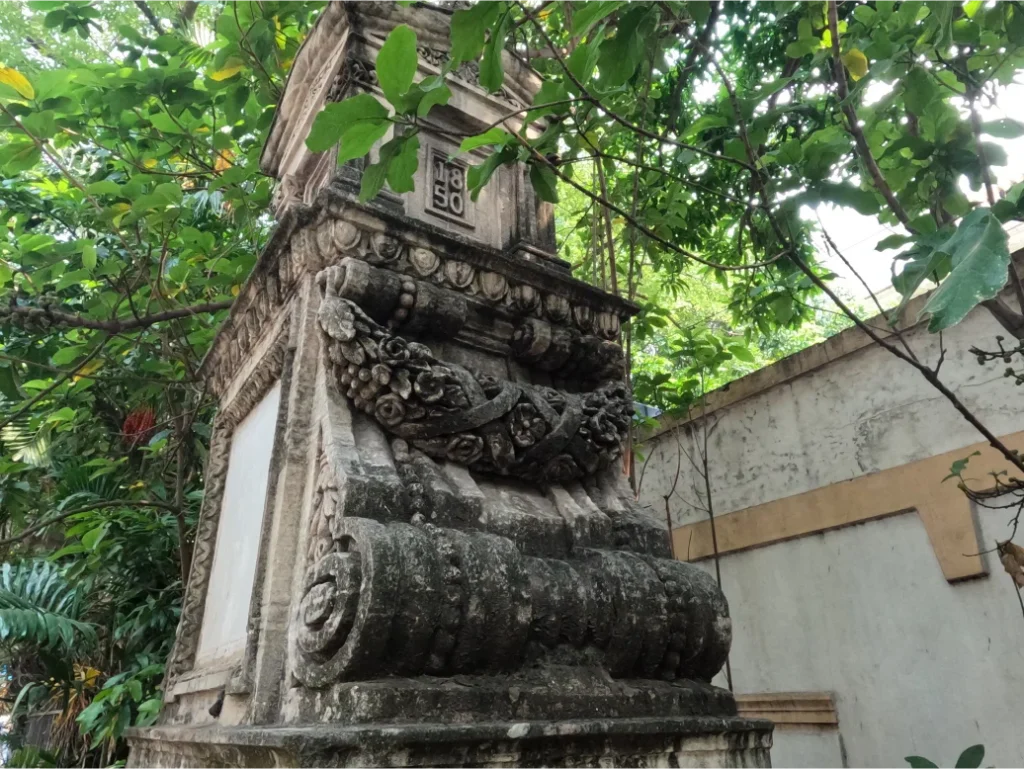
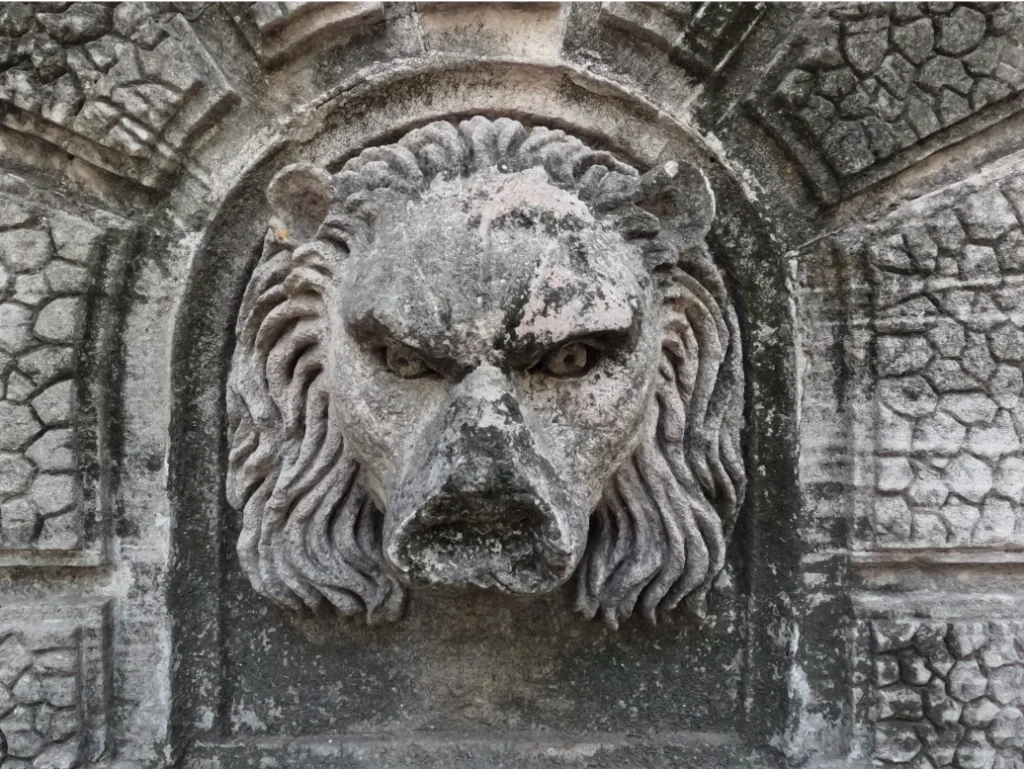
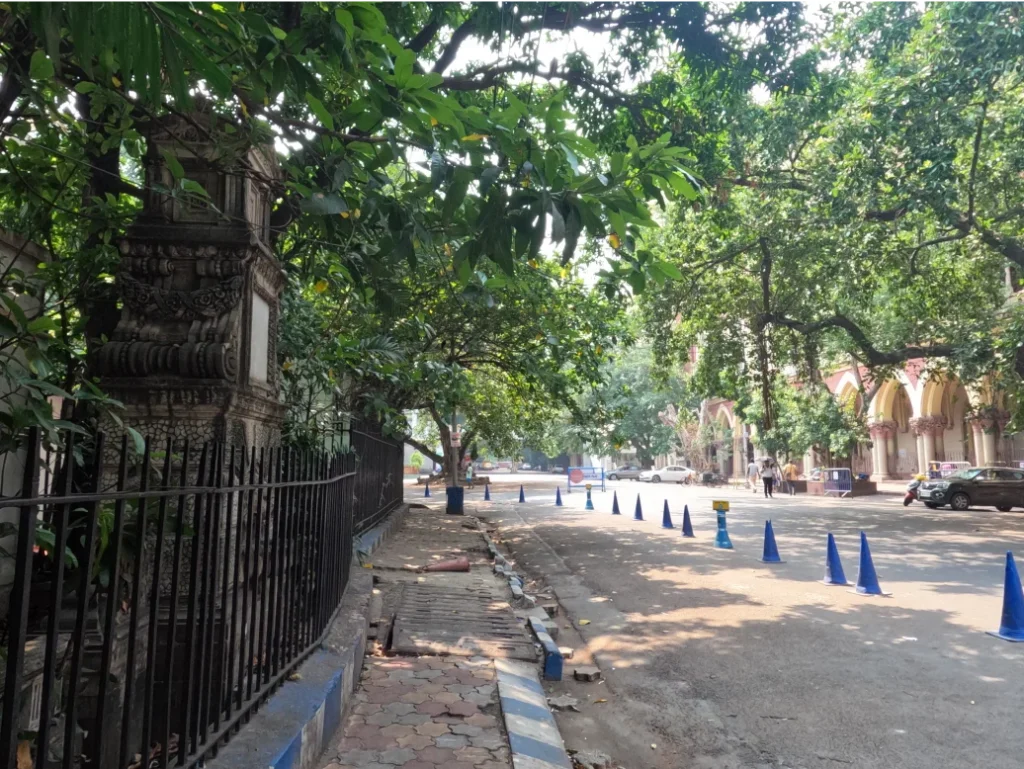
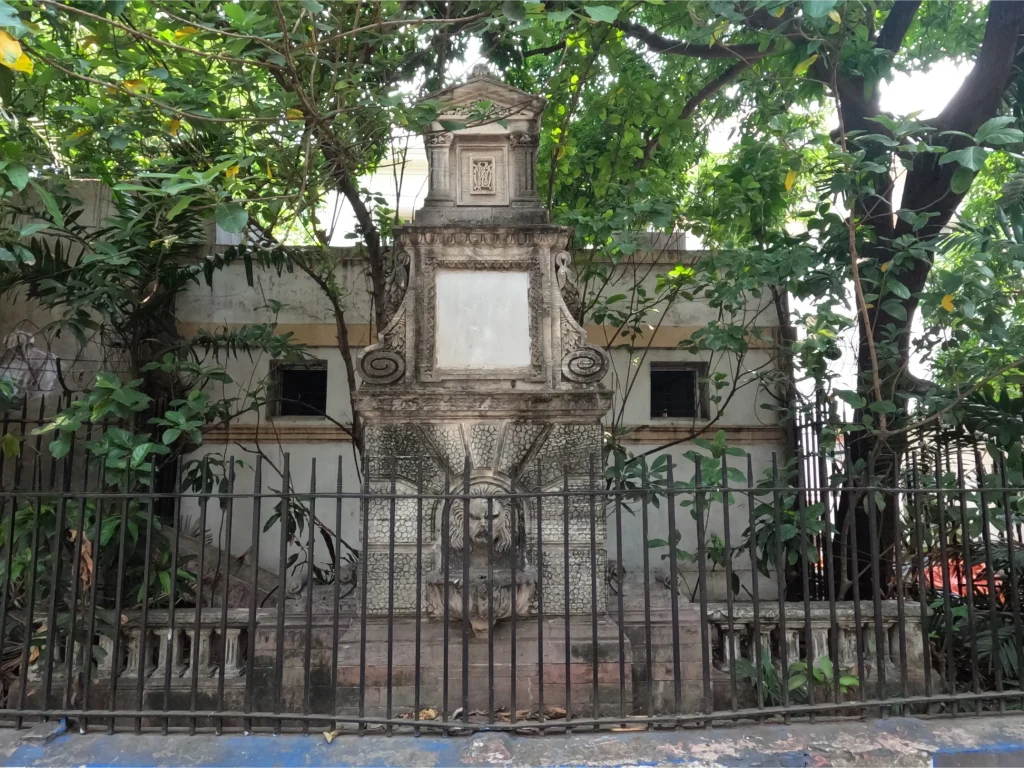
The third fountain is the McDonnell fountain. It is a Victorian-styled water fountain located near the Calcutta High Court on Esplanade Row. It was built in 1894 as a memorial to William Fraser McDonnell, a senior member of the Bengal Civil Service and a judge of the high court. The fountain is a fine example of the Gothic revivalist style, with a floral capitol on its apex and a lion’s head on the front. The fountain was also used as a drinking source for horses, as McDonnell was a steward of the Calcutta Turf Club, the premier horse racing club in the subcontinent.
McDonnell was a part of the Bengal Civil Service and served as a magistrate in Bihar and later became a judge of the Calcutta High Court. He came to the limelight for he showed remarkable bravery during the Indian Rebellion of 1857. He rescued many Europeans from the mutineers and was awarded the Victoria Cross for his “manly rectitude and kindly disposition” as per a tablet on the fountain which unfortunately is not legible presently. The fountain has an inscription of 1850 on one side and 1886 on the other and marks his tenure as a civil servant in Bengal unlike other memorials which acknowledge the year of birth and death. The fountain was donated by his friends in England in 1894, the year of his death.
The forgotten fountain by Desmond Doig
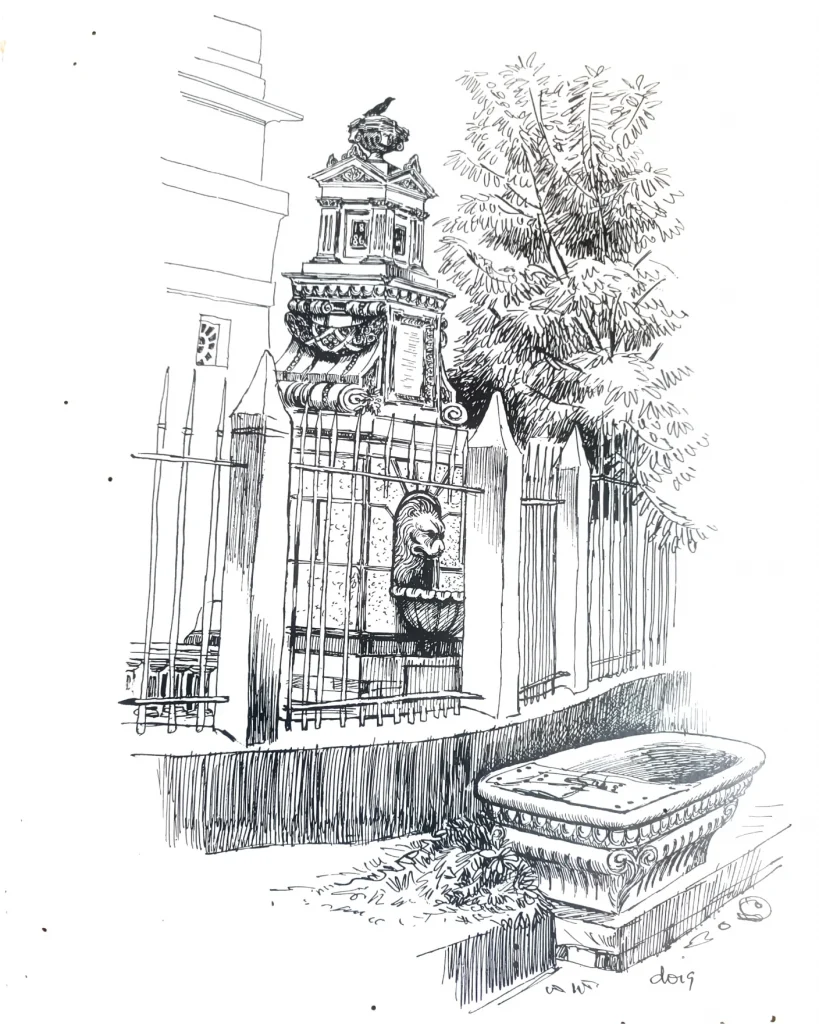
Measured Drawings of the McDonnel Fountain
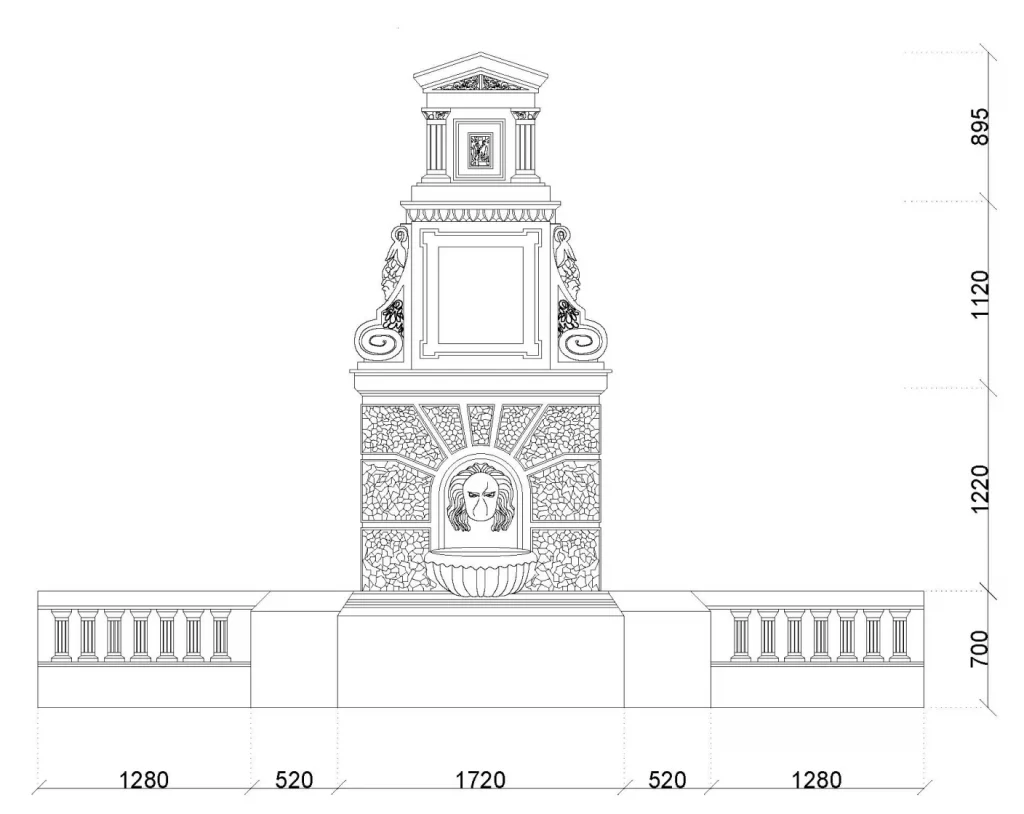
The fountain was once a beautiful and functional landmark of Kolkata, but over time it has fallen into neglect and decay. It currently has no access at all as it is surrounded by railings on all sides and is thus hidden behind rows of parked cars and clothes that are hung on the railing to dry. The inscription on the white marble plaque has faded and shows evidence of structural damage all throughout. The lionhead that once served as a spout for drinking water lies broken and dry. Although the cistern for the horses is not there anymore, the fountain stands and is a reminder of Kolkata’s rich colonial heritage and its association with public facilities like providing drinking water.
McDonnel Fountain 360 images
References
- Chandra, S. (2015). PANIOTY FOUNTAIN … British Acclaim for Greek Legacy. Retrieved from panioty-fountain-british-acclaim-for.html
- Datta, R. (2014). McDonell Monument, Calcutta (Kolkata). Retrieved from mcdonnell-monument-forgotten-drinking-fountain/
- GetBengal. (2021). Panioty, Kolkata’s marble drinking water fountain by the Greeks! Retrieved from panioty-kolkatas-marble-drinking-water-fountain-by-the-greeks
- Ghosh, D. (2014). The McDonnell Drinking Fountain: A Forgotten Monument of Calcutta. Retrieved from the-mcdonnell-drinking-fountain.html
- Gupta, D. (2021). The Greco-Roman lion taps are still found on the streets of Kolkata. Retrieved from https://www.getbengal.com/details/the-greco-roman-lion-taps-are-still-found-on-the-streets-of-kolkata
- Ray, S. (Director). (1958). Parash Pathar [Motion Picture]. Retrieved from Video
- Sengupta, S. (2021). McDonnell Fountain at Dalhousie Square: A gem gathering dust. MyKolkata. Kolkata. Retrieved from Article
- Tathagata Neogy, Immersive Trails.